
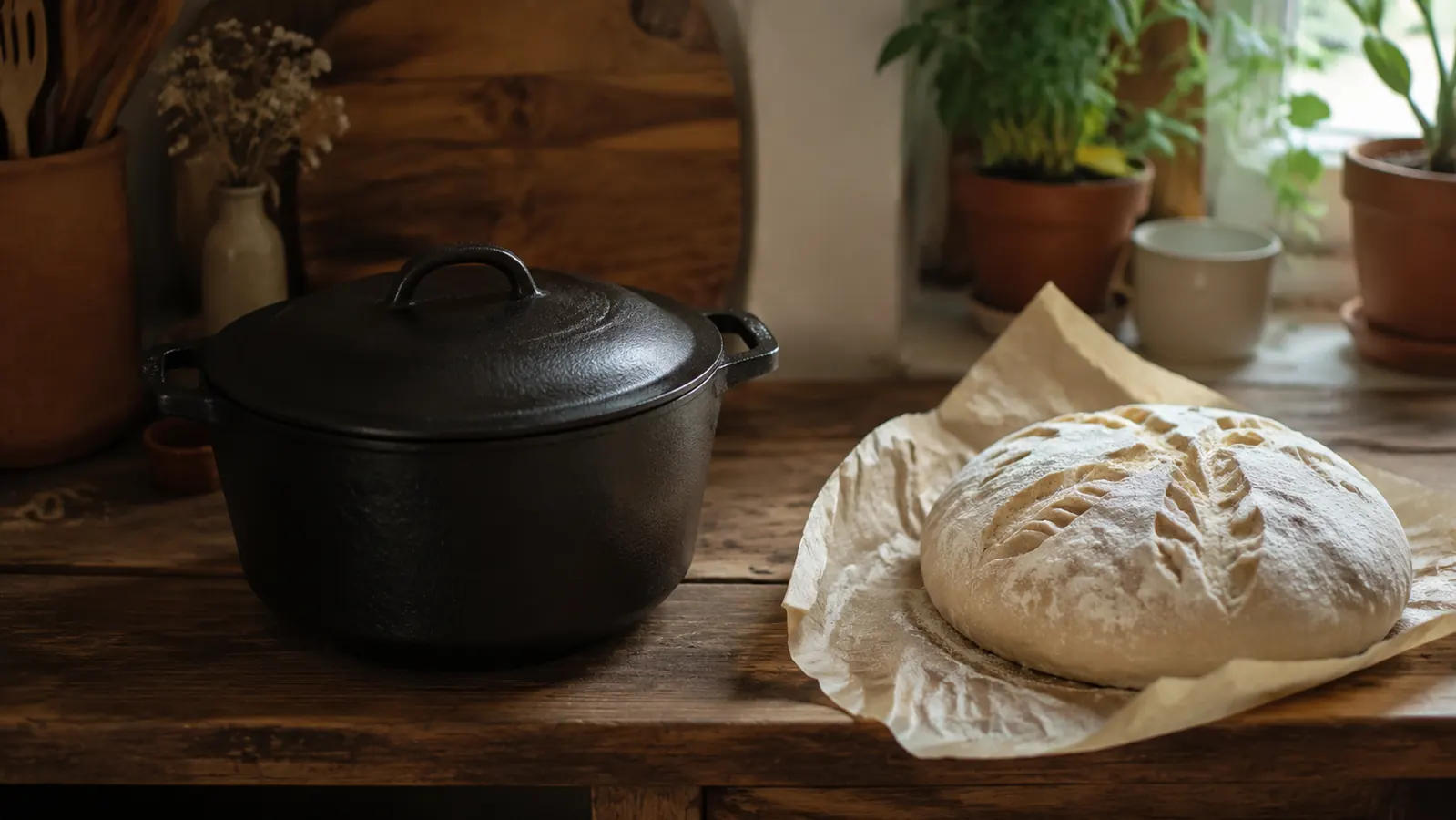
Nobody warned me about the weight. I had read every bread-baking blog post about the Lodge Cast Iron Double Dutch Oven, and they all talked about the same things: the tight-fitting lid traps steam, the crust turns dark and crackly, it costs a fraction of Le Creuset. All true. What they left out is that when you reach into a 500-degree oven to wrangle a 12-plus pound cast iron pot with oven mitts that were not designed for this moment, you will understand why some bakers eventually start shopping for enameled alternatives.
I have been using the Lodge 5qt Double Dutch Oven for sourdough, sandwich loaves, and occasional braising for a long time now. I own it. I recommend it, usually. But I recommend it with a list of things nobody put in the product description, and that is what this review is actually about.
The Quick Verdict
Exceptional baking results at a price that is hard to argue with, but the weight, the seasoning upkeep, and the bare cast iron learning curve are real commitments, not minor footnotes.
Amazon Check Today's Price →Still want it after reading the honest version? Check today's price.
The Lodge Double Dutch Oven is still the best value cast iron baking vessel on the market for most home bakers. If the tradeoffs below match what you can live with, it is a genuinely great buy.
Amazon Check Today's Price on Amazon →How I've Used This Thing (And What I've Put It Through)
My Lodge Double Dutch Oven has baked sourdough every weekend for well over two years. It has gone from cold storage to a 500-degree oven preheated for 45 minutes more times than I can count. I have dropped the lid once, on my granite countertop, and that was a memorable afternoon. I have baked in it in a humid South Carolina summer and a dry Colorado January when I was visiting my sister. I have neglected it for three weeks during a renovation and had to deal with the consequences. So when I tell you what follows, I am not working from a three-week test period.
I also want to be clear that I am specifically NOT going to talk about crust color, oven spring, or steam retention in this review. Those things are covered elsewhere on this site, and they are genuinely excellent. This review is about what you are signing up for when you bring bare cast iron into your kitchen, because that is what nobody spells out.
The Weight Problem Is Real and It Gets Worse at Temperature
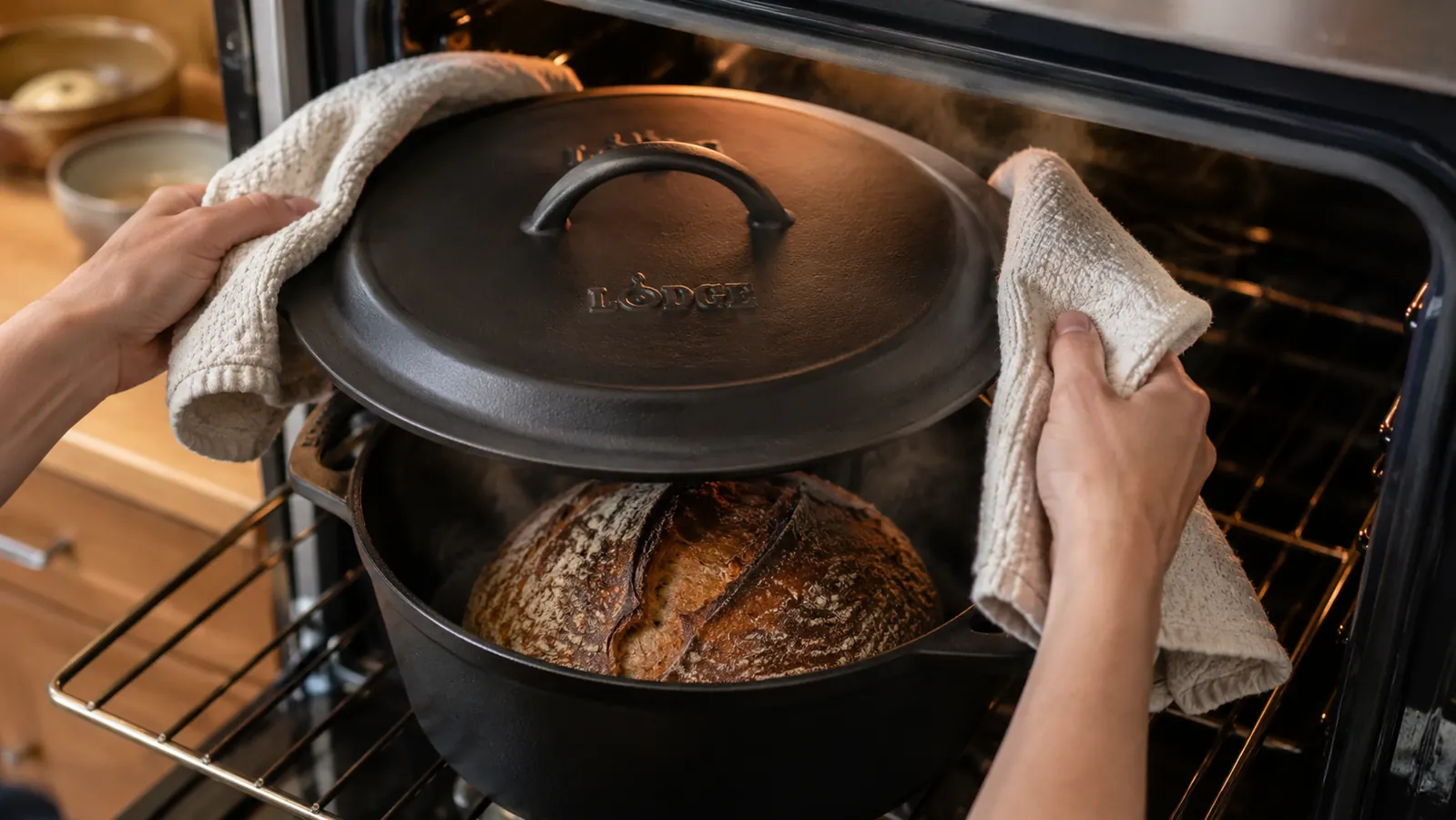
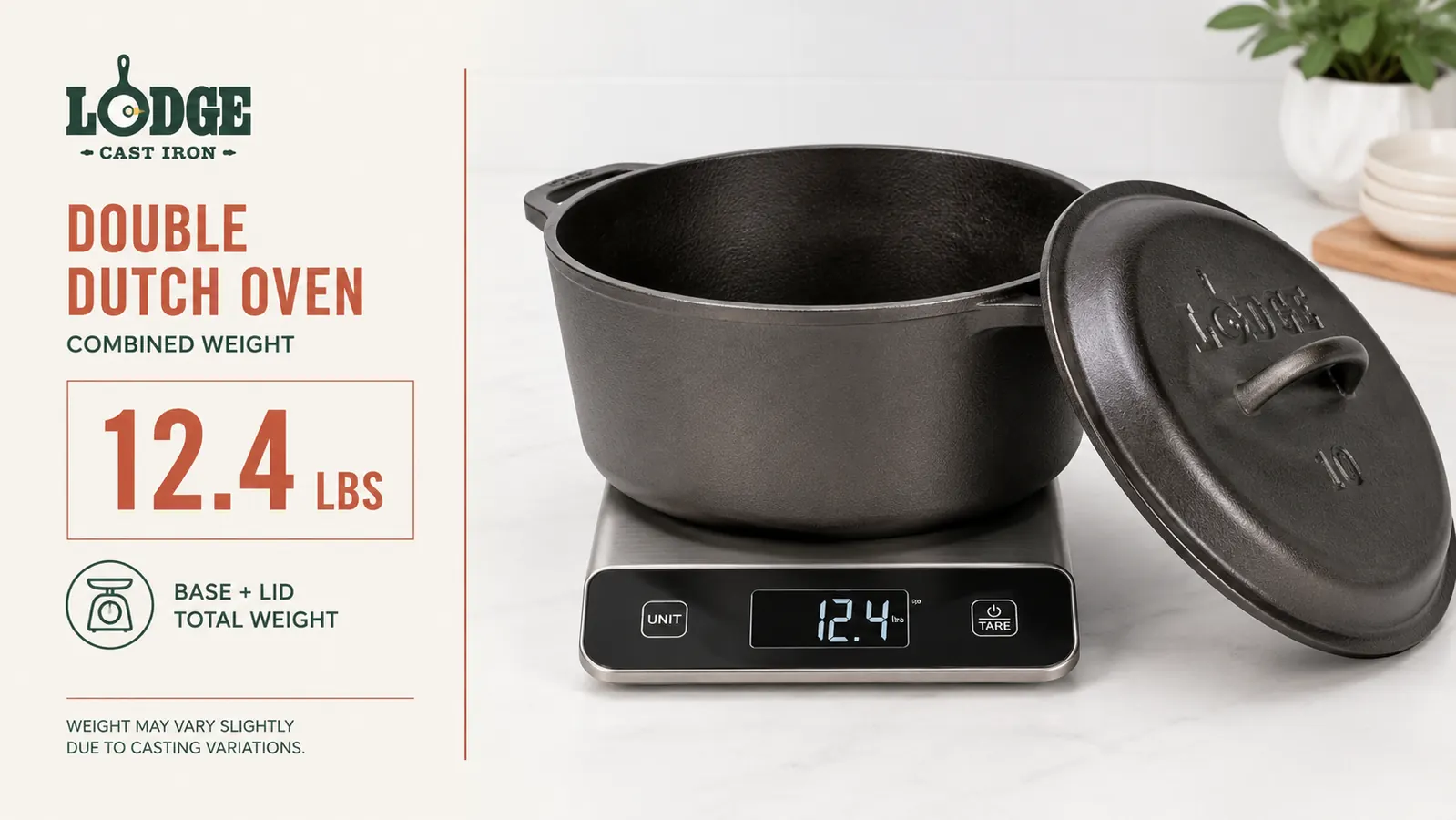
The Lodge Double Dutch Oven with its lid weighs right around 12 to 13 pounds. That is not especially heavy when it is sitting on your counter. It is quite different when the pot has been preheating at 500 degrees for 45 minutes, you have a scored dough boule on parchment ready to drop in, and you are trying to lift the lid off the oven rack with two oven mitts while also not burning your forearms on the rack above it.
The lid alone weighs about 5 pounds. The base is 7 or 8. Neither number sounds alarming until you factor in the temperature, the oven mitts reducing your grip by about 40 percent, and the fact that you are doing this over a rack at mid-oven height. If you have any shoulder issues, wrist issues, or simply smaller hands, this is worth thinking about before you buy. I have watched my 64-year-old neighbor struggle with the lid removal step and eventually switch to a lighter enameled pot for exactly this reason.
The workaround most bakers land on is using a cold-start method where you put the dough in a room-temperature pot and then put everything in the oven together. This works fine for many recipes. But if you are baking high-hydration sourdough and want maximum oven spring, the preheated vessel matters. So the weight problem does not fully go away, it just gets negotiated.
Bare Cast Iron Requires Maintenance That Nobody Mentions at Purchase
This is the part that surprises people most. The Lodge Double Dutch Oven comes pre-seasoned from the factory, and Lodge does a decent job with that initial seasoning. But bare cast iron seasoning is not a finish. It is a coating you have to maintain, rebuild, and occasionally repair. It is made of polymerized oil, and it can be damaged by soap, by high-acid foods, by moisture sitting on the surface, and by abrasive scrubbing.
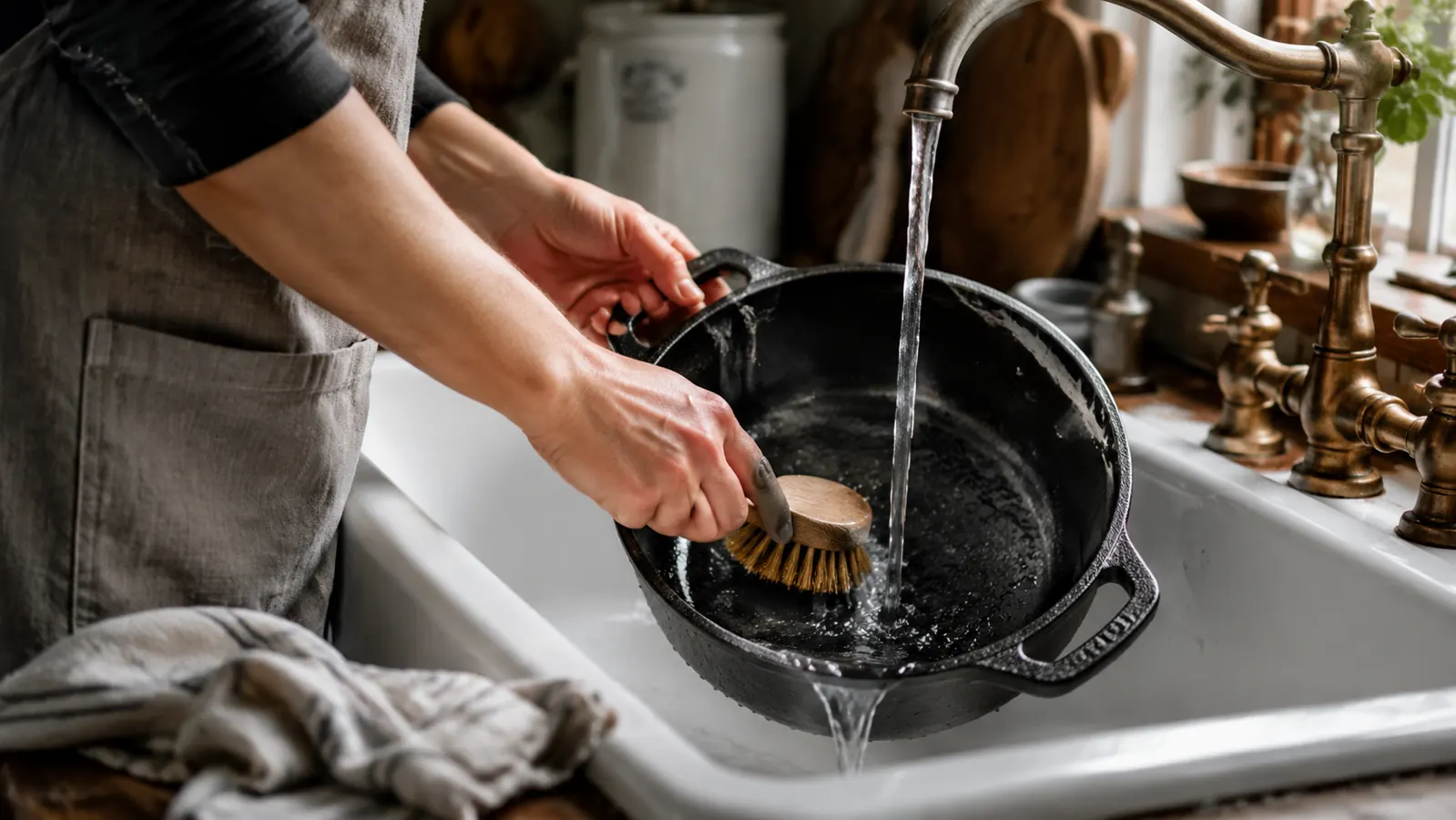
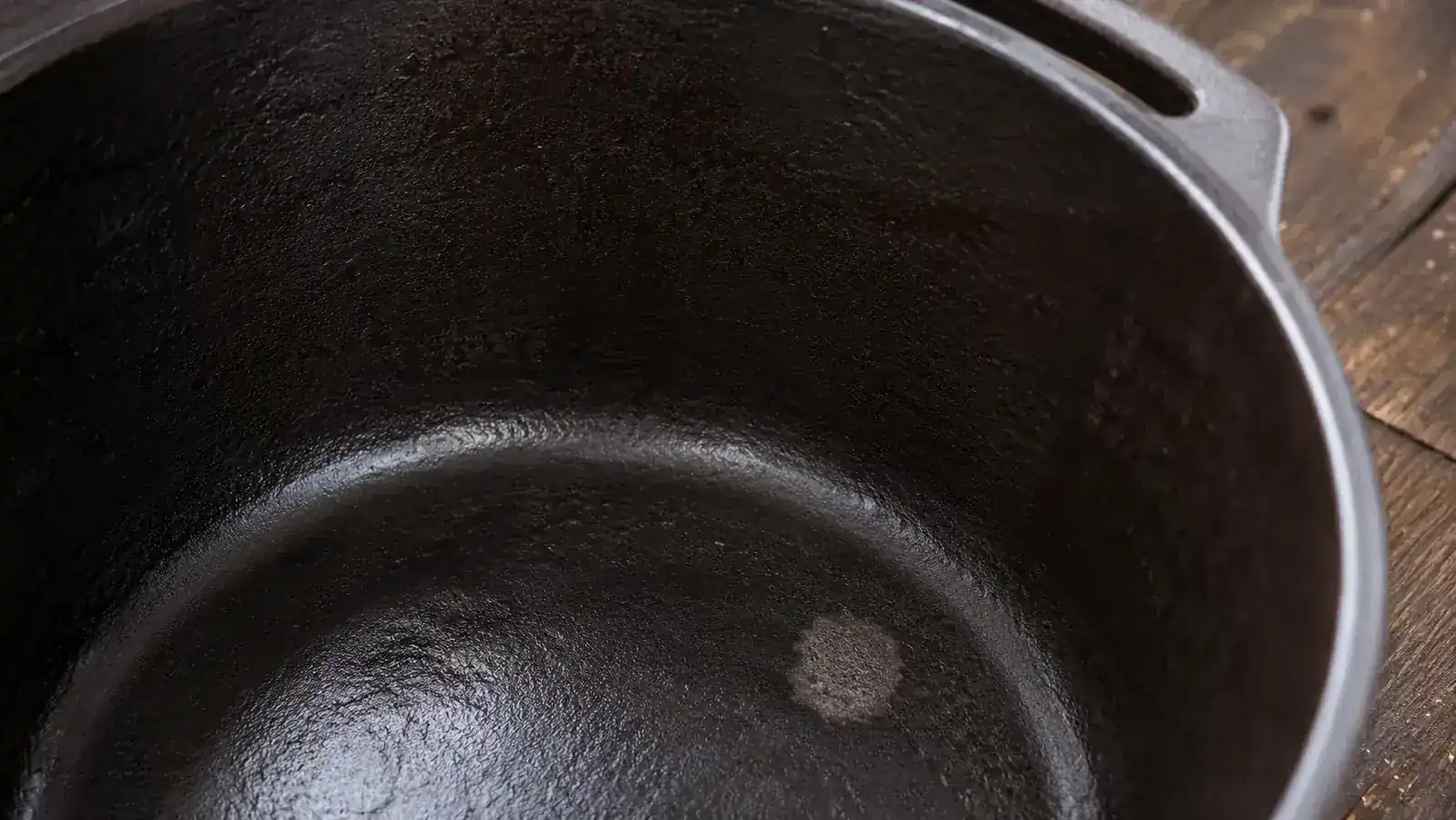
For a bread baker, the acid and soap issues are mostly irrelevant. You are not making tomato sauce in this thing. But the moisture issue is very real. After every wash, you need to dry the Lodge completely, then put it on a burner over low heat for a minute or two to drive off all remaining moisture, then wipe a thin layer of oil on the interior while it is still warm. If you skip this step regularly, you will eventually see orange rust spots. Not dramatic rust, but enough to require a re-seasoning session.
Re-seasoning is not difficult. You scrub off the rust with steel wool, wash, dry completely, coat the interior in a thin layer of flaxseed or vegetable shortening, and bake it upside down in a 450-degree oven for an hour. It works. But it is also a two-hour project on a Sunday afternoon that you did not plan for. I have done it three times in two years. Once because of neglect, once because I stored it with the lid on and trapped humidity inside, and once after the renovation when I just let it sit for too long.
Cast iron is not low-maintenance. It is medium-maintenance with a very loud failure mode called rust.
The Lid Wobble and the Hot Lid Problem
The Lodge Double Dutch Oven lid is designed to double as a skillet, which is the whole point of the Double Dutch design. The lid is flat on the outside and has a short loop handle. When you invert it, it sits as a 10-inch skillet. In practice, I use the lid-as-skillet function maybe two or three times a year, usually for cornbread or sauteing something when my other pans are occupied. It is genuinely useful when you need it.
The wobble issue is more of a daily annoyance. The lid sits on the base with a slight wobble rather than a precision fit. It is still an effective steam trap during baking because the weight of the lid creates a reasonable seal. But if you pick the pot up with the lid on and tilt it, the lid shifts. During the transition from counter to oven with a loaded pot, this requires two hands and some attention. It is not a flaw that breaks the product. It is just something nobody tells you before you buy.
The bigger issue with the lid is that during the first phase of bread baking, the lid is sitting at 500 degrees on top of your pot. When you need to remove it at the 20-minute mark to let the crust color, you are taking off a 5-pound piece of metal that is extremely hot. You cannot set it on a regular trivet because the bottom of the lid is also 500 degrees. You need a dedicated spot, which is usually another oven rack or a cast iron trivet rated for that temperature. Silicone trivets melt. I found this out.
Rust in Humid Climates: What Nobody Mentions
If you live somewhere with high ambient humidity, the maintenance conversation gets more serious. I spent one summer in coastal South Carolina and had to re-season my Lodge twice in four months despite using it regularly and following my normal drying routine. The ambient moisture was just high enough to start working on the seasoning between uses.
The practical solution for humid climates is to store the Lodge with a folded paper towel inside to absorb any residual moisture, and to never store it with the lid fully seated. Leave a small gap for air circulation. This sounds fussy, and it kind of is. It is also the difference between a Dutch oven that stays in good shape and one that becomes a re-seasoning project every other month.
If you live in a dry climate, this is much less of an issue. Colorado, Arizona, Utah bakers can be significantly more casual about storage. The humidity variable is real and location-dependent, and most reviews are written by people who have not experienced both ends of that spectrum.
What I Liked
- Baking results genuinely rival cookware costing four times as much
- Lid-as-skillet gets real use, especially for cornbread and quick sautes
- Virtually indestructible if you maintain the seasoning
- Preheats evenly with no hot spots that would burn the bottom crust
- 4.7 stars across 15,000-plus reviews is earned, not inflated
- If you chip it, drop it, or scratch the seasoning, you can fix it yourself
Where It Falls Short
- Combined weight of 12-plus pounds at 500 degrees requires planning and physical comfort
- Bare cast iron seasoning demands ongoing maintenance, not a one-time finish
- Lid has noticeable wobble rather than a precision seat
- Rusts in humid climates without careful storage habits
- Cannot put it in the dishwasher, ever
- Hot lid placement requires a heat-safe surface rated above 500 degrees
The Bare Cast Iron Learning Curve vs Enameled Alternatives
The honest comparison here is between the Lodge and an enameled cast iron Dutch oven like a Le Creuset or Staub. I have used both. Enameled cast iron has a fused glass coating that does not require seasoning, does not rust, tolerates soap, and looks attractive on the counter. It also costs anywhere from two to five times as much as the Lodge. The Lodge is budget-friendly. A comparable enameled Dutch oven from a French brand starts at a premium price and goes up from there.
For bread baking specifically, the baking results are not dramatically different. Both trap steam effectively. Both retain heat. Both produce excellent crust. The thermal mass and steam retention are comparable. Where the enameled pot wins is in the maintenance category, full stop. You can put an enameled Dutch oven in the dishwasher. You can leave it wet. You can cook a tomato braise in it the same day you bake sourdough. None of those things are true with the Lodge.
Where the Lodge wins is the price, and the fact that if you chip or scratch or crack the enamel on a Le Creuset, you have an expensive pan that now has a compromised finish and a warranty conversation ahead of you. If you damage the seasoning on a Lodge, you re-season it on a Sunday afternoon and it is fine. For people who bake hard and do not particularly want to treat their cookware as precious, that durability argument is actually significant.
Who This Is For
The Lodge Double Dutch Oven is the right choice for home bakers who bake regularly enough to maintain the seasoning through use, who are physically comfortable managing a heavy 500-degree vessel, and who would rather spend less and put in some maintenance effort than spend significantly more for a more forgiving surface. It is also a solid choice if you are new to Dutch oven baking and want to learn the process without a large investment, with the understanding that the learning curve includes the cast iron care component.
Bakers who bake sporadically, say once or twice a month, will find the maintenance demands slightly more annoying because infrequent use combined with imperfect storage is exactly the scenario that produces rust. The Lodge rewards consistency. If your baking schedule is regular, it takes care of itself. If you bake in bursts and then ignore it for a month, plan for the occasional re-seasoning session.
Who Should Skip It
Skip the Lodge if you have any shoulder, wrist, or grip limitations that make heavy cookware at oven temperature a real safety concern. This is not a small consideration. The combination of weight and temperature is genuinely demanding, and there is no shame in buying the lighter enameled option for ergonomic reasons. Also skip it if you live somewhere extremely humid and already struggle to keep cast iron in good shape, or if the idea of a seasoning maintenance routine sounds like something you will simply not do. The pot will rust, and then you will be annoyed, and the reviews will not have mentioned this enough.
Also worth saying: if you already own a Lodge cast iron skillet that is in good shape and well-seasoned, you probably already know whether you are a cast iron maintenance person or not. Be honest with yourself about that track record before buying a larger, more involved piece.
If you've read this far and you're still in, the Lodge is genuinely worth buying.
Most bakers who go in with clear expectations keep this pot for decades. With 15,263 reviews at 4.7 stars, the consensus is real. Check today's price and see what Lodge owners are saying.
Amazon Check Today's Price on Amazon →