
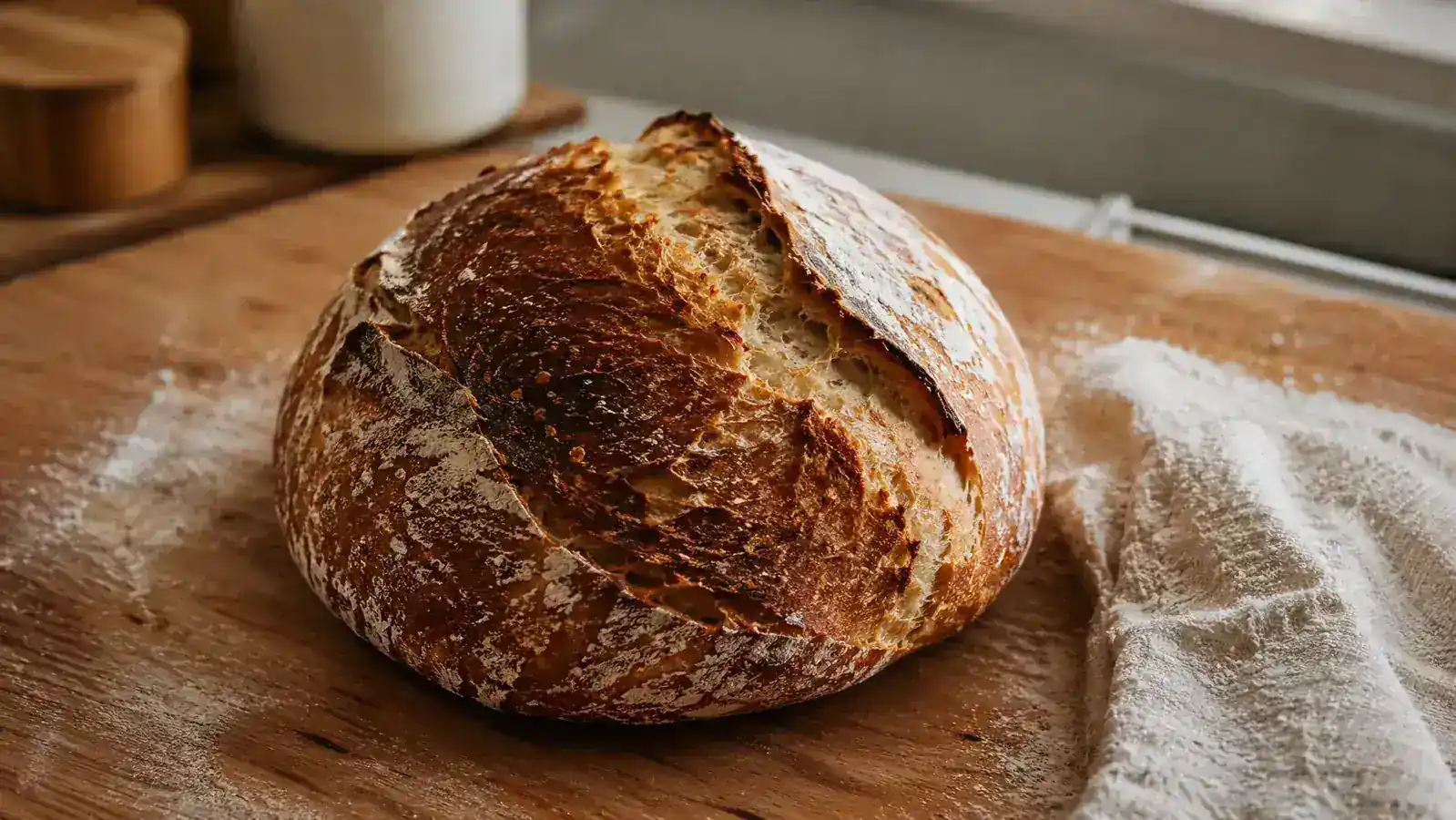
The Lodge Cast Iron Double Dutch Oven has been sitting in my oven every Saturday morning for eight months. Before I tell you why, I need to back up two years and explain the streak of flat, pale, thoroughly disappointing sourdough loaves that led me to it.
For those two years, my sourdough looked like it had given up. Pale crust, barely any rise, a crumb so tight it could have passed for sandwich bread from a plastic bag. I kept a baking journal. I tracked hydration, ambient temperature, the exact hour I fed my starter before each bake. I changed flour brands three times. I timed my folds down to the minute. I watched so many YouTube videos about oven spring that the algorithm thought I was a professional baker.
None of it worked. Every loaf came out the same way: a round, beige puck with a crust that softened within an hour of cooling. No ear. No bloom. No crackle when I squeezed it. I was convinced the problem was me. That I was missing some fundamental baker's instinct other people were born with. My neighbor Rosie baked gorgeous loaves and made it look effortless. I asked her what I was doing wrong. She looked at me, then looked at my sheet pan, and said quietly, 'Honey, what are you baking it in?'
That question stopped me cold. A sheet pan. I had been baking sourdough on a flat sheet pan covered with a mixing bowl as a makeshift lid. I thought as long as there was some kind of cover for the first half of the bake, the steam would do its job. I was wrong about nearly everything.
Rosie explained it simply: sourdough needs a sealed, intensely hot environment in the first twenty minutes to get proper oven spring. The moisture from the dough has to stay trapped right against the surface of the loaf so the crust stays pliable long enough for the bread to expand fully. A mixing bowl over a sheet pan loses steam from every gap. The heat is uneven. The bread just sits there, sets too fast, and stays flat. What Rosie used was a heavy cast iron pot with a tight-fitting lid. She had been baking that way for fifteen years and said she would never go back.
The pan was the problem all along. Two years of adjusting my starter and my technique, and the fix was sitting in the cast iron section at the hardware store.
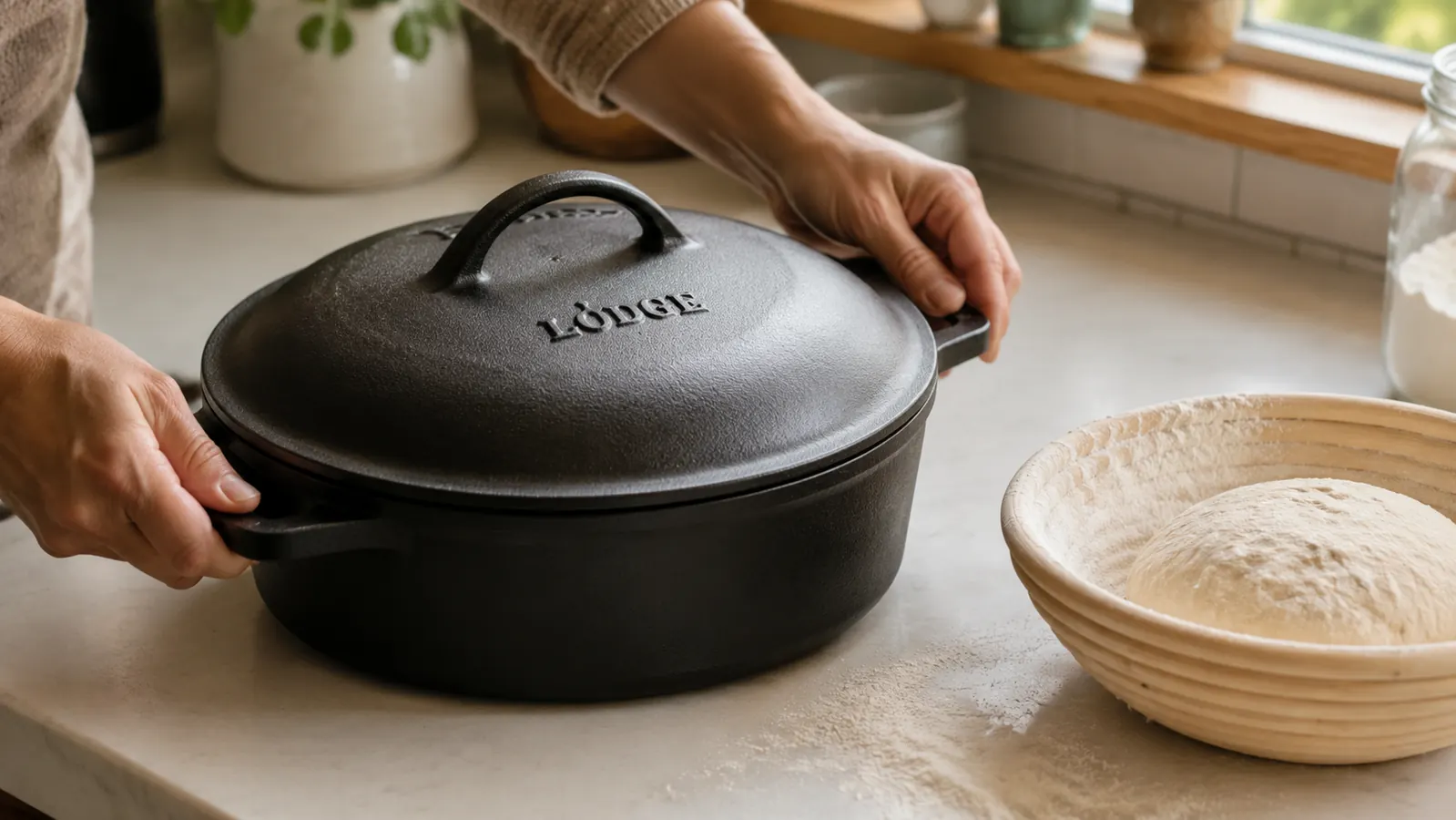
I went home and looked up what Rosie was describing. After reading through a long thread of serious home bakers comparing options, I landed on the Lodge Cast Iron Double Dutch Oven, the 5-quart version with the skillet lid that doubles as a shallow pan for finishing the crust. It is not an expensive piece of equipment. That surprised me. I had assumed anything that would actually fix my bread would cost what the bread-baking books cost: a lot. The Lodge was budget-friendly at the time, and every baker in that thread talked about it the same way, with the matter-of-fact confidence of someone recommending a tool they have used so long they cannot imagine the alternative. You can read a more detailed breakdown in this long-term review of the Lodge Double Dutch Oven if you want the full rundown before buying.
The same cast iron pot serious home bakers have used for years is still the one they recommend.
The Lodge Cast Iron Double Dutch Oven has over 15,000 reviews and a 4.7-star rating. The 5-quart size fits most standard sourdough recipes, and the skillet lid gives you a second cooking surface when you flip it off for the final browning.
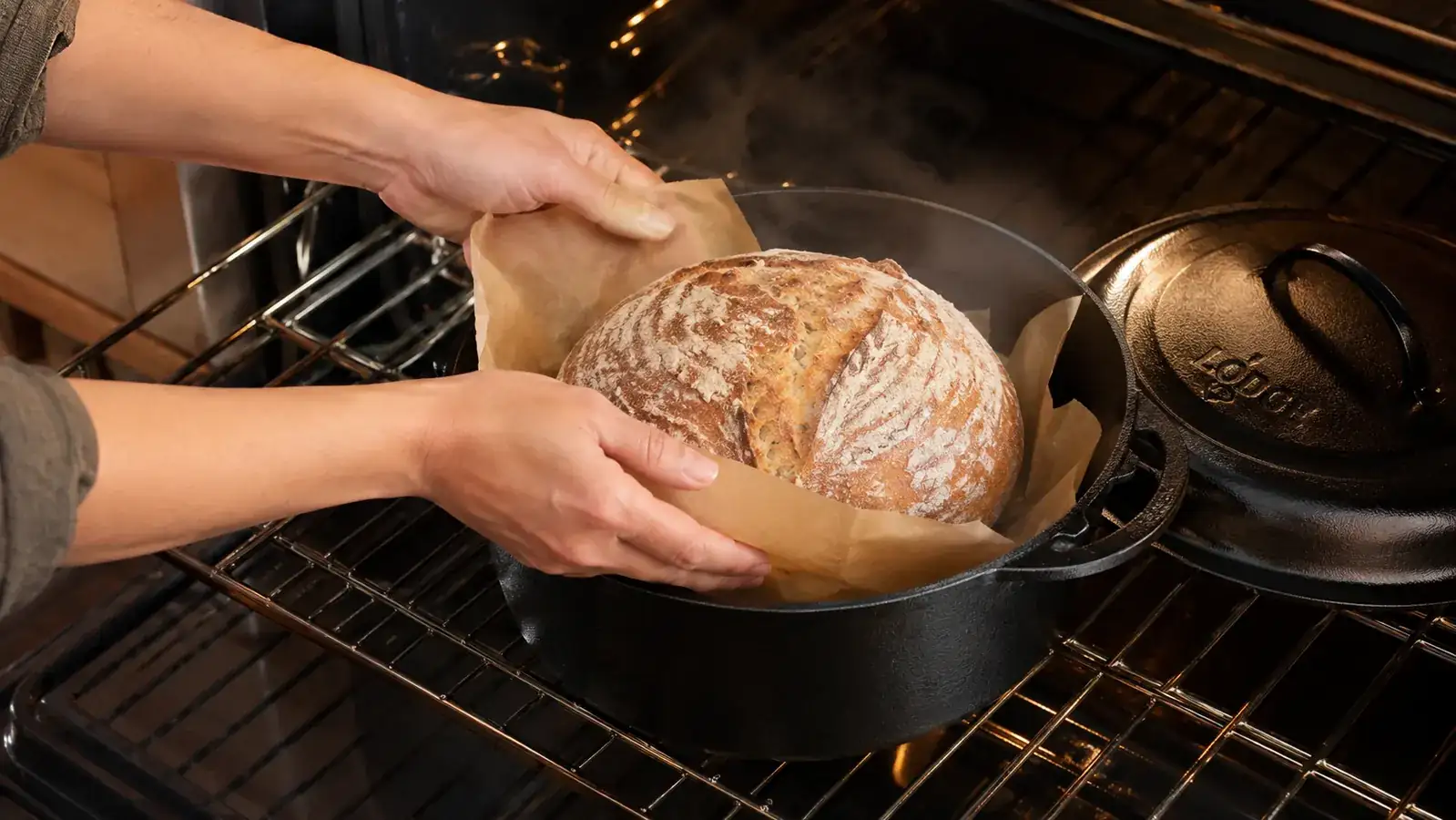
Amazon Check Today's Price on Amazon →My first bake with the Lodge was three weeks after Rosie's question. I preheated the pot inside the oven at 500 degrees for a full forty-five minutes, the way the bakers online recommended. I was nervous lowering the dough in on its parchment sling because the pot was heavy and genuinely hot. But the lid went on, the oven door closed, and I stood in my kitchen for twenty minutes doing nothing except trying not to open the oven door.
When I pulled the lid at the twenty-minute mark, the loaf had already bloomed. I could see the ear forming along the score line. The color was a pale gold that kept deepening over the next twenty minutes with the lid off. When I took it out and set it on the rack to cool, it crackled. That sound. Anyone who bakes bread knows what that sound means and knows how good it feels to finally hear it.
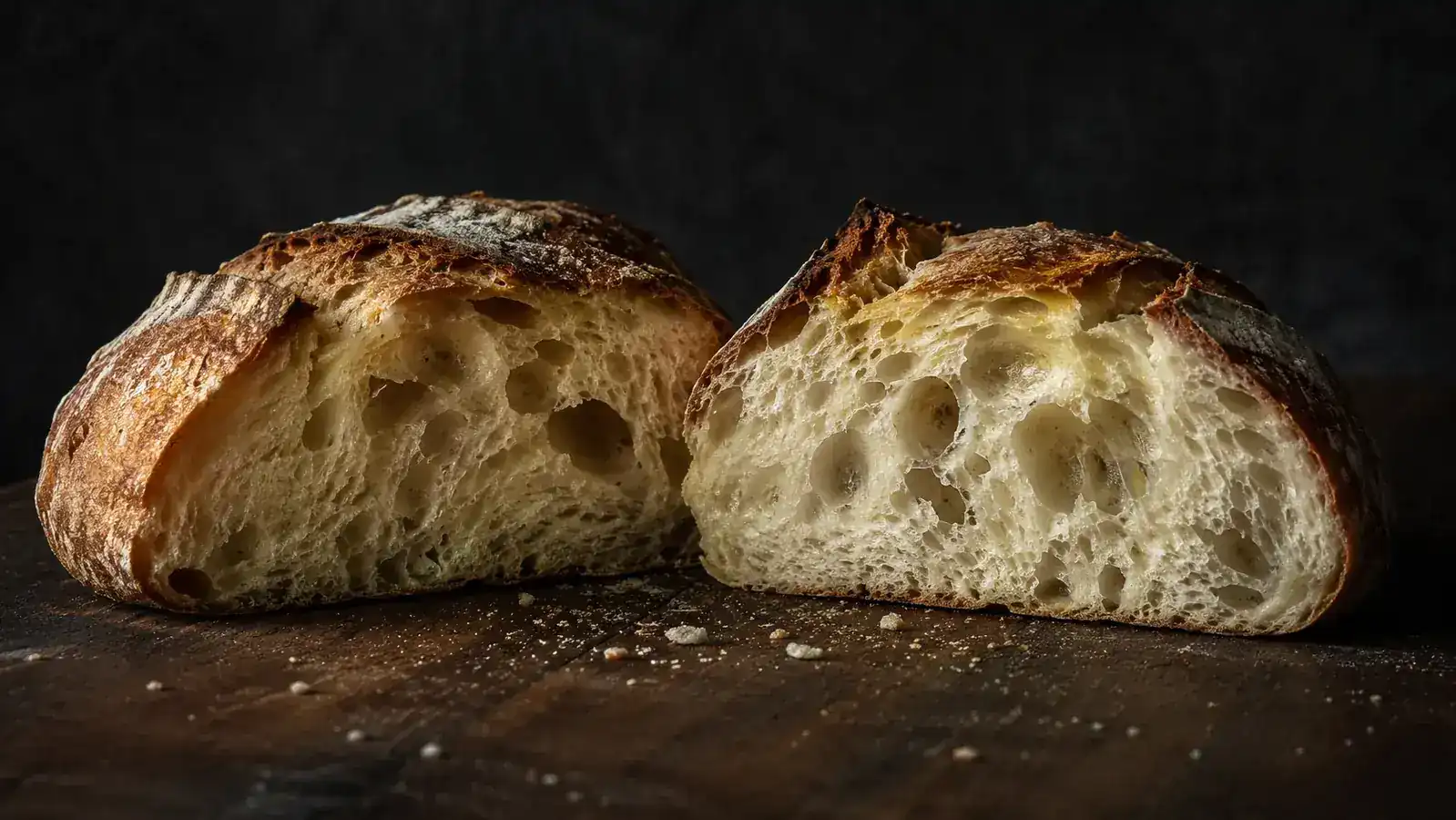
I sliced into the loaf after an hour, even though every baking guide tells you to wait longer and I was too impatient to listen. The crumb was open. Irregular holes, a glossy interior, real chew. It was not a perfect loaf. The ear was a little uneven and the bottom got slightly darker than I wanted. But it was more bread than I had managed to make in two full years of trying.
What I'd Tell You If We Were Sitting at My Kitchen Table
If you have been baking sourdough for a while and your loaves come out flat or pale, please do not spend another month adjusting your starter schedule or your folding technique before you check what you are baking in. The vessel matters more than almost any other variable once your starter is active and your timing is reasonable. I know that sounds too simple, and I felt a little foolish when I figured it out. But it is true. If you want to understand exactly why cast iron works so well for this, this piece on 10 reasons sourdough bakers rely on cast iron lays it out clearly.
The Lodge has been in my oven every Saturday for eight months now. It is pre-seasoned from the factory, which means it was ready to use out of the box. The weight is real, around eleven pounds, so I use both hands when I move it in and out of a hot oven, and I keep a thick silicone mitt nearby at all times. The skillet lid has become my go-to pan for searing chicken thighs on weeknights, so it earns its counter space beyond baking days. That kind of double-duty is exactly what I look for before I let something take up permanent space in my kitchen.
It is not a perfect piece of cookware. The handle on the lid gets extremely hot and needs a mitt even when you think it might not. Cast iron requires a bit of care after washing, a quick dry on the burner and a thin wipe of oil, which is a minor habit but a real one. And if you drop it on a tile floor, do not expect the tile to survive. These are the tradeoffs. None of them have made me reach for anything else.
If you are serious about sourdough and you are still baking on a sheet pan or in an enamel pot you are not fully preheating, this is the thing I wish someone had told me at the beginning. Not a new recipe, not a different flour, not a longer fermentation schedule. Just the right pot, properly hot, with a lid that actually holds steam.
If your sourdough is flat, the pan is the first thing to fix.
The Lodge Cast Iron Double Dutch Oven is what many serious home bakers use and recommend. The 5-quart capacity handles standard sourdough recipes, and the design gives you steam retention in the first bake phase plus a skillet lid for final browning.
Amazon Check Today's Price on Amazon →