
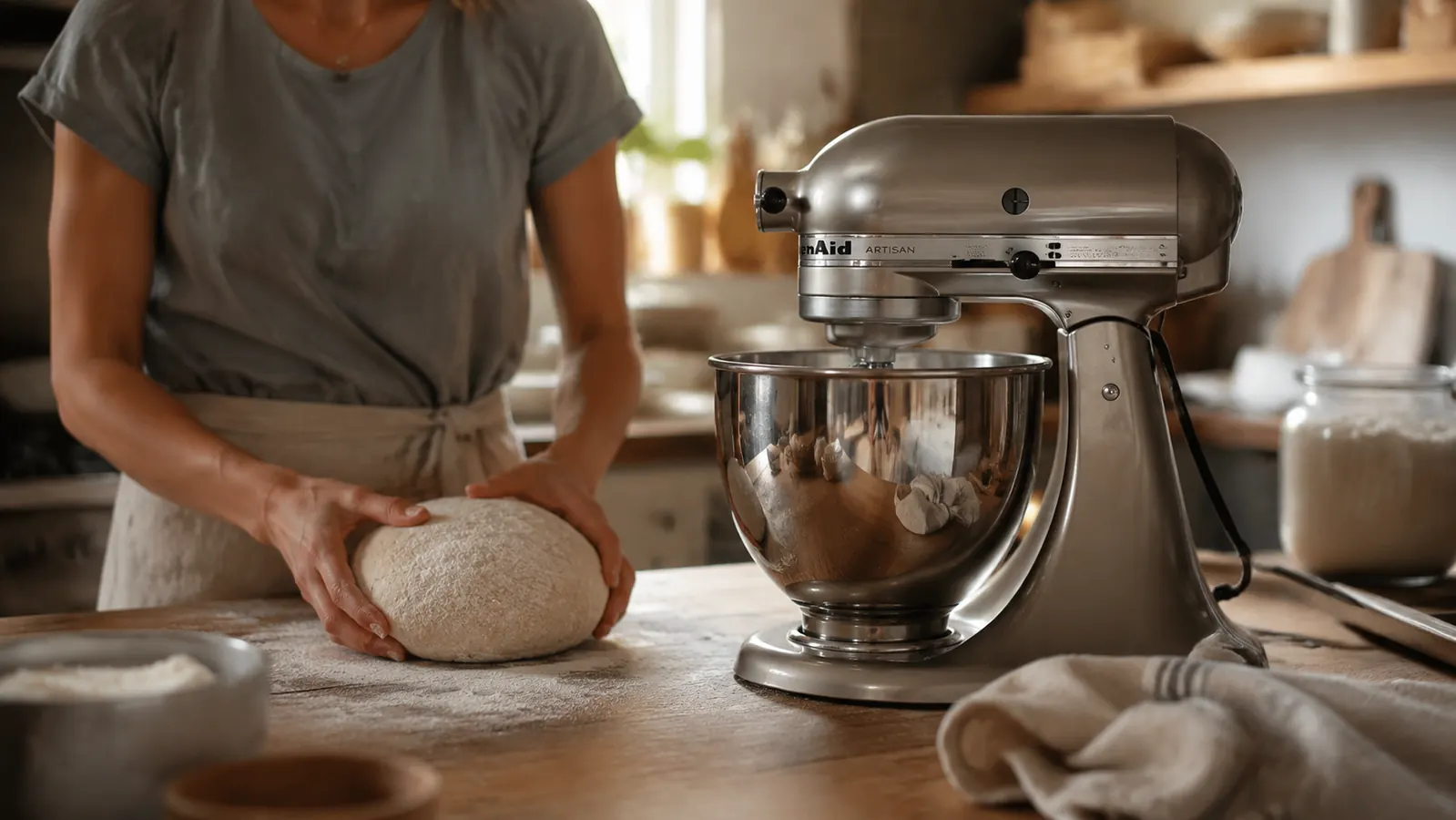
I kneaded bread by hand every Saturday for seven years before I finally bought a stand mixer. I told myself the hand work was therapeutic. It was not. My wrists ached, my dough was inconsistent batch to batch, and I was always 15 minutes behind on everything else. The day the KitchenAid Artisan arrived on my counter, I thought I was buying a convenience appliance. What I was actually buying was a better baker.
If you're still wrestling stiff doughs by hand or burning through cheap hand mixers that bog down on anything thicker than cake batter, this list is for you. These are the 10 reasons a stand mixer changes your baking, pulled from my own Saturday mornings and from the experiences of every serious home baker I know. The KitchenAid Artisan Series 5-Quart is the specific machine behind most of what follows, and I'd buy it again without a second thought. You can find the full long-term breakdown in my KitchenAid Artisan review after three years of weekly use.
Still kneading by hand? Your wrists called. They want a KitchenAid.
The KitchenAid Artisan has a 4.7-star rating across 22,896 reviews. It comes with a dough hook, flat beater, and wire whip. Fourteen colors. One machine that handles every baking task you've been doing the hard way.
Amazon Check Today's Price on Amazon →It Kneads Bread Dough Without Destroying Your Wrists
The dough hook on the KitchenAid Artisan runs at a consistent, controlled speed for as long as you need it to. A standard bread dough needs 8 to 10 minutes of kneading to develop proper gluten. By hand, that is exhausting. In the mixer, you set it and go make coffee. The motor handles the resistance without slowing down, which means you get properly developed dough every single time instead of just kneading until your arms give out.
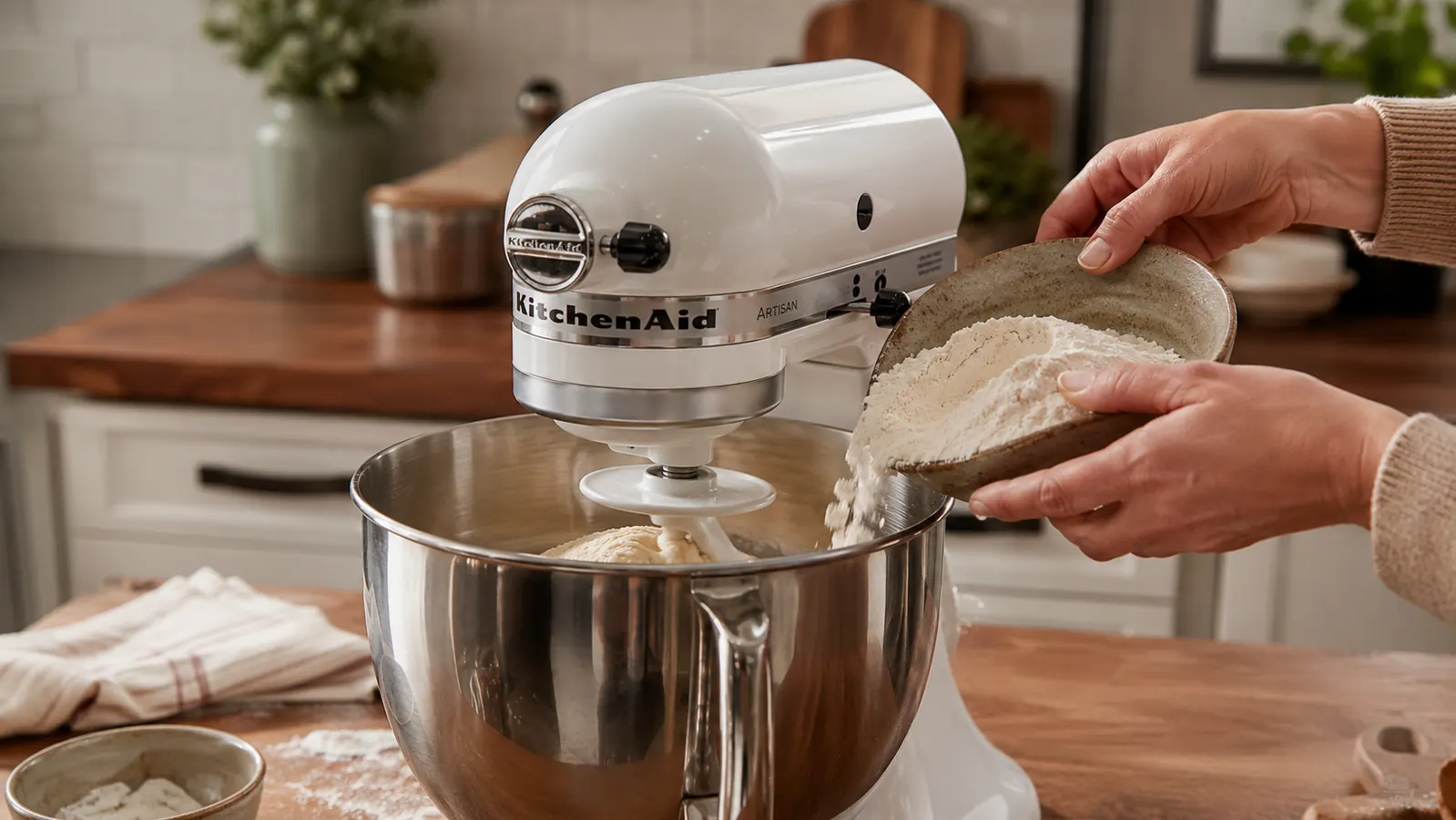
It Frees Your Hands for the Rest of the Recipe
This is the one nobody talks about but everyone notices immediately. While the mixer runs, you can measure your next ingredient, prep the pan, check the oven temperature, or just drink your coffee in peace. I used to do all my baking in a serial, one-thing-at-a-time crawl. Now I work in parallel. A two-hour baking session turns into 90 minutes just because I stopped standing over a bowl stirring.
Meringue Goes From Uncertain to Bulletproof
Whipping egg whites to stiff peaks by hand is arm-burning, time-consuming, and sensitive to even a tiny bit of yolk contamination. With the wire whisk attachment on the KitchenAid, you get stiff, glossy peaks in about four minutes on speed 8, consistently, every time. I've made French macarons in my kitchen, something I would never have attempted when I was doing it by hand. The consistency changes what you're willing to try.
Cookie Dough Creams Properly, Not Just Sorta
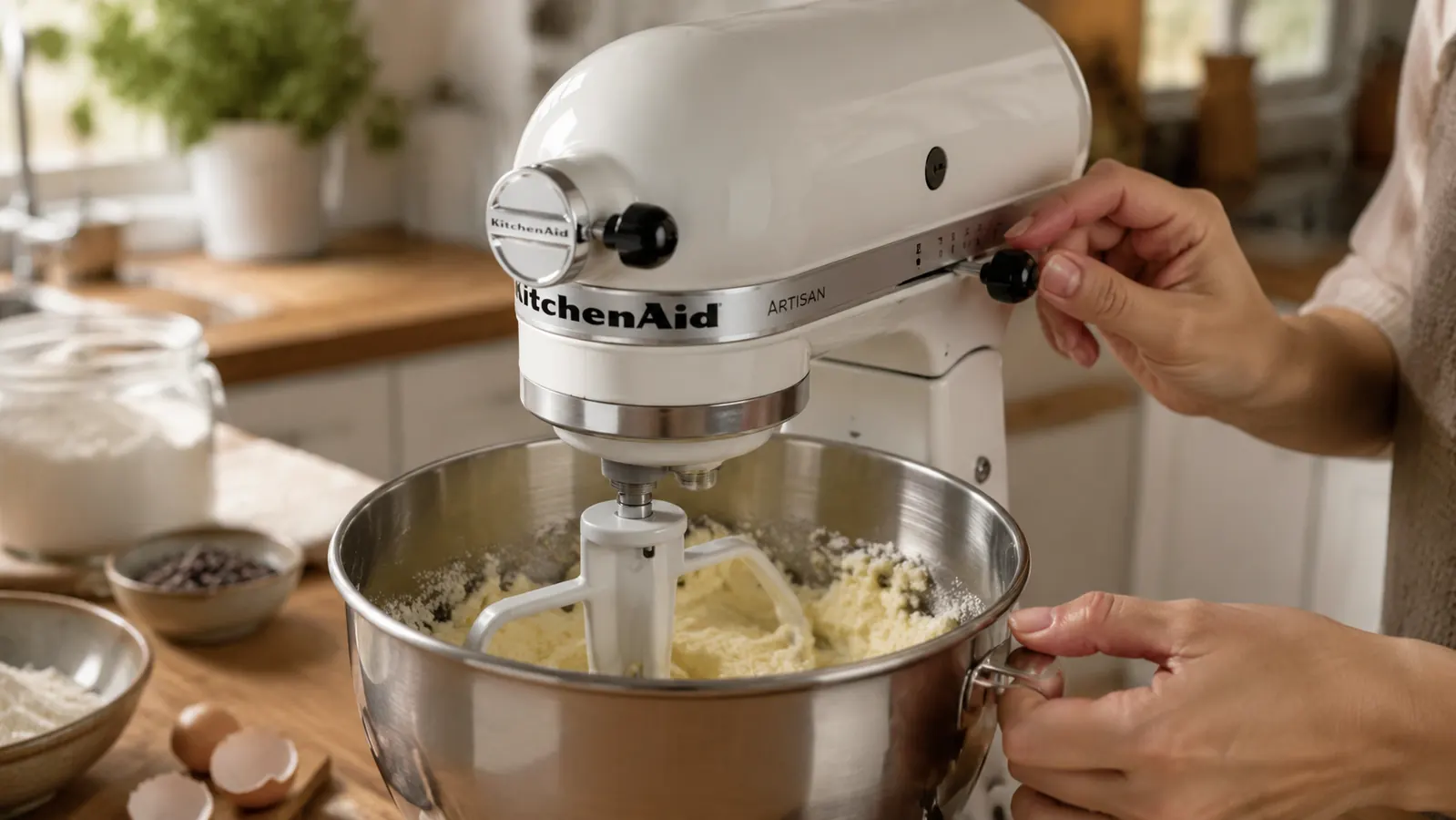
Creaming butter and sugar correctly, meaning until it's genuinely pale and fluffy, takes about five minutes at medium-high speed. Most people hand-mix for two minutes and call it done. The flat beater attachment on the Artisan does this right: it moves the full bowl's worth of dough through the beater continuously, and the result is cookies that rise better and have a noticeably lighter texture. Once you know what properly creamed butter looks like, you can't go back.
It Handles Double Batches Without Complaint
The 5-quart bowl holds enough for a double batch of most cookie recipes or two standard loaves of bread dough. I bake for Saturday farmer's market pickups at my neighbor's stand, which means I often need quantity. A hand mixer would overheat or bog down on a double batch of stiff dough. The Artisan runs through it at speed 2 like it isn't there. The 325-watt motor isn't showy about it, but it is consistent.
Once I stopped kneading by hand, my bread got more consistent. Not because I got better. Because the machine is more patient than I am.
Speed Control Means Better Results on Delicate Recipes
The Artisan has 10 speeds, and the low end is genuinely slow. Speed 1 is a gentle fold. Speed 2 is a slow mix for tough doughs. That range matters when you're making something like a chiffon cake batter that needs careful incorporation of flour to avoid deflating the egg whites. A hand mixer's slow speed is usually still too aggressive. The Artisan lets you match the speed to the task, which is what separates a mixer from a good mixer.
The Attachment Hub Opens Up Pasta, Meat Grinding, and More
The power hub on the front of the Artisan accepts over a dozen optional attachments including a pasta roller and cutter, a meat grinder, a food grinder, a sausage stuffer, and a vegetable spiralizer. I use the pasta roller attachment regularly. It takes one machine and turns it into a small kitchen production line. You don't have to buy any attachments to get full value from the mixer, but the option is there when you want it.

It Lasts. Not Seasons. Years.
The all-metal construction on the Artisan is not decoration. The gear case is metal, not plastic. The bowl is stainless steel. The head is solid and heavy. I have had mine for over four years of heavy weekend use, and it looks and performs the same as the day it arrived. This is a machine built to the same spec it was in the 1950s, when KitchenAid made them for professional bakeries. The design hasn't changed much because it didn't need to.
Whipped Cream in Two Minutes Flat
I know this sounds minor. It is not. Fresh whipped cream that took you two minutes is better than anything from a can and better than most tubs of whipped topping. You control the sweetness and the stiffness. You can fold in vanilla or a splash of bourbon if you want. With the wire whisk and cold cream, it's done before you can find the serving spoon. Once this becomes a Tuesday-night habit, you won't want to go back.
It Makes You a More Ambitious Baker
This is the real one. I didn't start making croissants, brioche, and laminated doughs because I got better at baking. I started making them because I had a machine that made them achievable. A brioche dough needs 20 minutes of kneading at low speed to develop the gluten before you add butter. Nobody does that by hand. With the Artisan, I do it on a Sunday morning while my first coffee brews. The machine removes the barrier. Your ambition does the rest. If you want the full story on what this mixer is actually like after years of real use, read my honest KitchenAid Artisan review including the parts that frustrated me.
What I'd Skip
The Artisan is not the right call if you bake almost exclusively stiff bagel or pizza dough in large quantities. For that kind of load, the Professional 5 Plus with its bowl-lift design and larger motor is a better fit. The Artisan's tilt-head design works beautifully for the range of baking most home bakers do, but if you are running the machine at high resistance loads for 30-plus minutes several times a week, the Pro is worth the extra spend. For everyone else, including most people reading this, the Artisan is exactly enough machine.
Ten reasons is enough. Your next batch of bread dough deserves a machine that can actually handle it.
The KitchenAid Artisan 5-Quart comes with three attachments, fits any KitchenAid attachment ever made, and is built to last longer than any appliance currently on your counter. Check today's price and available colors on Amazon.
Amazon Check Today's Price on Amazon →