

The KitchenAid Artisan stand mixer has been sitting on my counter for just over a year now, and I still think about the twelve years I baked without it. Every Saturday for those twelve years, I woke up early, fed the sourdough starter, and braced myself for the part I loved and dreaded in equal measure: kneading. Eight minutes minimum for a single loaf. Twelve if I wanted any real structure in the dough. My wrists started complaining somewhere around year five. By year ten, my hands would ache into Sunday afternoon, and I had to decide before each bake whether my shoulder was up for it.
I told myself the hand work was the point. Then I bought a silicone kneading mat, a wooden dough scraper, and watched every slap-and-fold video I could find so I could cut down the actual kneading time and still develop gluten. I tried cold-ferment schedules that minimized hand contact. All of it helped a little, and none of it solved the real problem, which was that I wanted to bake two or three things on a Saturday morning and I could physically only do one before my hands gave out.
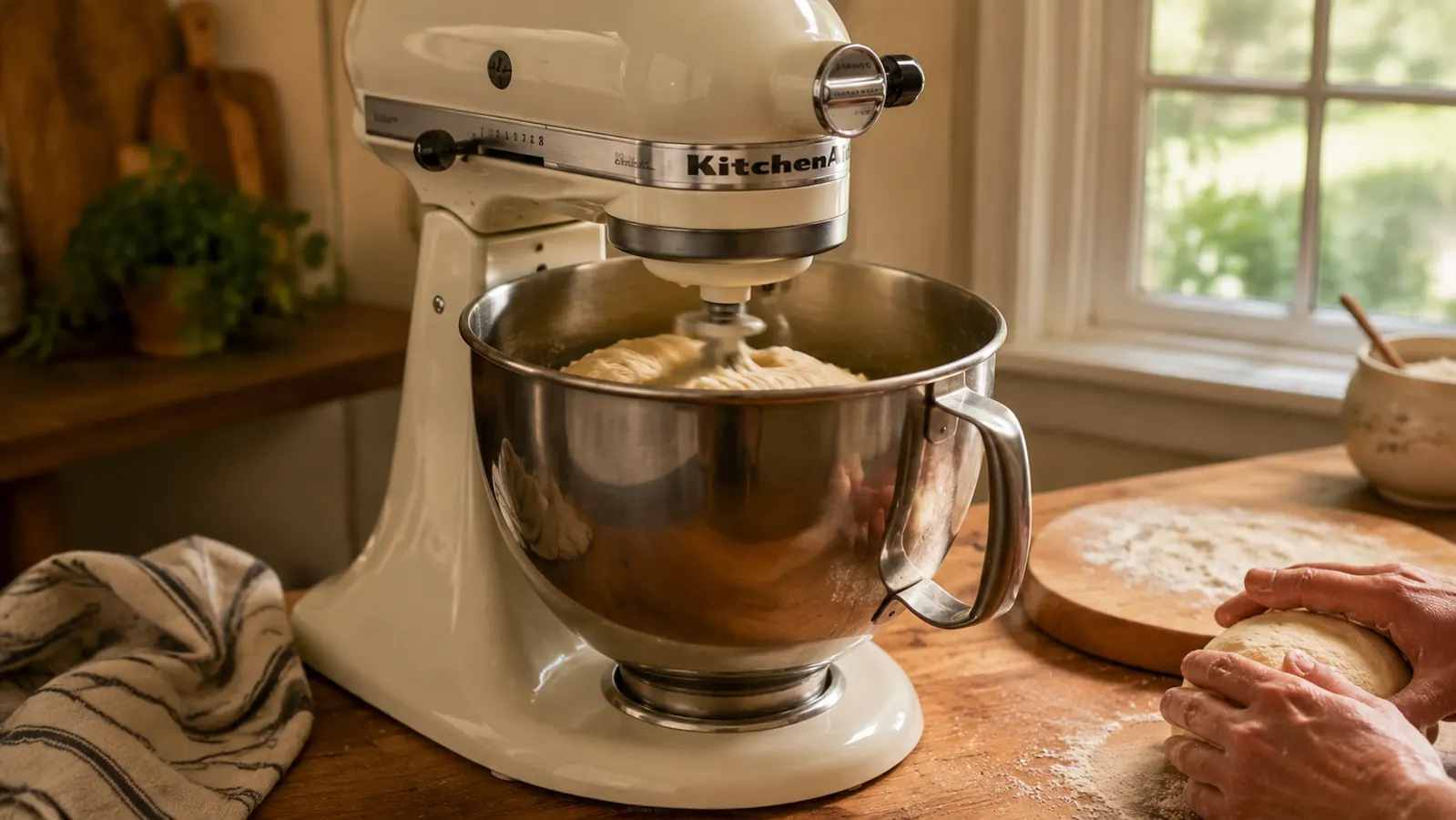
My sister-in-law had been suggesting the same fix for three years. I kept putting her off. The counter space. The cost. The idea that I would somehow be cheating, like real baking meant doing it the hard way. She finally dropped one at my house on a Tuesday in November with a note that said: 'Bake one thing with it. Then tell me you still think this.' I plugged it in mostly to prove I didn't need it.
It was the KitchenAid Artisan Series 5-quart, Contour Silver. I mixed a basic white sandwich loaf. The dough hook went in, I set the speed, and I walked away. I washed the flour off the counter. I made coffee. I came back in six minutes and the dough had that smooth, windowpane-passing elasticity that usually takes me twelve minutes of hard work to get. And my hands hadn't touched it.
I came back in six minutes and the dough had that smooth, windowpane-passing elasticity that usually takes me twelve minutes of hard work to get. My hands hadn't touched it.
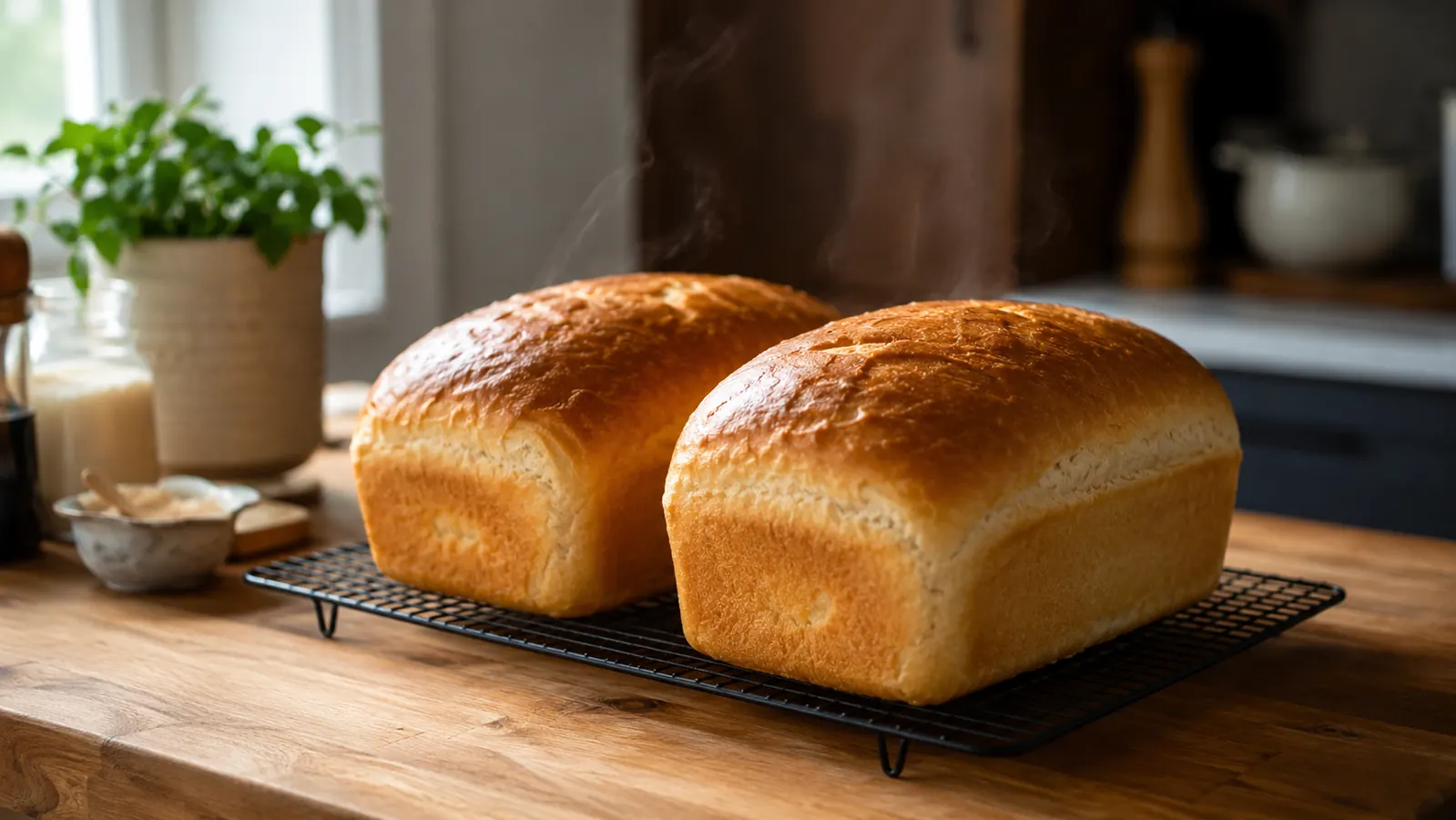
I should tell you what I expected from a stand mixer: convenience at the cost of control. What I got was the opposite. The dough hook on the KitchenAid works at a lower, steadier speed than I ever managed by hand, which means less heat building up in the dough and more consistent gluten development across the whole batch. My bread has been better since I stopped hand-kneading it. That took about a week to fully accept.
The 5-quart bowl handles everything I throw at it. A double batch of brioche, which is the thing I always avoided because the enriched dough is exhausting to work by hand. Stiff cookie dough in winter when the butter is cold. Whipped cream for eight. I do a lot of cookie exchanges in December and the old process was spread across three days of mixing in batches to keep my hands from giving out. This past December I did all of it in one Saturday morning and still had energy left.
Bake more on Saturday morning, ache less on Sunday afternoon.
The KitchenAid Artisan 5-quart stand mixer has a 4.7-star rating from over 22,000 home bakers. It handles bread dough, cookie dough, brioche, and meringue with the same steady motor. Check today's price on Amazon.
Amazon Check Today's Price on Amazon →I will also tell you what it doesn't do, because my sister-in-law glossed over this part. The 5-quart bowl has limits. If you are regularly making triple batches of a dense whole wheat bread, or you are baking weekly for a crowd, the motor will work harder than it wants to. I have pushed it on stiff doughs and noticed the machine walk slightly on the counter at high speeds. For my Saturday routine, it is perfectly sized. If you are a heavy-volume baker who goes through ten pounds of flour a week, you might want to look at the Professional 5 Plus before deciding. I cover that comparison in more depth in my long-term KitchenAid Artisan review.

The color is also a real decision and not a vanity one. The machine lives on your counter. It is heavy enough (26 pounds) that you are not moving it in and out of a cabinet every week. Whatever color you choose, you are committing to it as a permanent fixture in your kitchen, so pick one you actually like looking at. The Contour Silver reads as neutral enough that I stopped noticing it after a month, which I mean as a compliment.
What I'd Tell You If We Were Sitting at My Kitchen Table
Here is the honest version: I wasted three years of sore wrists being stubborn about hand-kneading. The machine does not replace the skill or the intuition you build from baking. You still have to know when the dough is right, what it looks like, how it feels when you do the windowpane test. The mixer just handles the physical labor so that knowledge can actually be applied across more than one recipe per week. If you bake with any regularity at all and your hands or wrists give you any grief, this is the thing you should have bought already. If you are a casual baker who makes one batch of cookies every few months, it is probably more machine than you need. But if baking is part of how you spend your weekends, the way it is for me, this is the last mixer you will ever buy. I genuinely cannot remember what I was waiting for.
Also worth knowing: the attachment hub on the front opens the machine up to pasta rollers, meat grinders, a spiralizer, a food processor bowl, and about a dozen other things I have not bought yet but probably will. Knowing the base machine works this well makes that a very easy future purchase. For more on whether the Artisan or the Professional model is the right fit for your baking volume, see 10 reasons a stand mixer transforms home baking.
If my sister asked me what to get, this is exactly what I'd say.
The KitchenAid Artisan Series 5-quart stand mixer. Buy it once, use it for decades. It has a 4.7-star rating from over 22,000 home bakers who feel the same way. Check today's price and available colors on Amazon.
Amazon Check Today's Price on Amazon →