
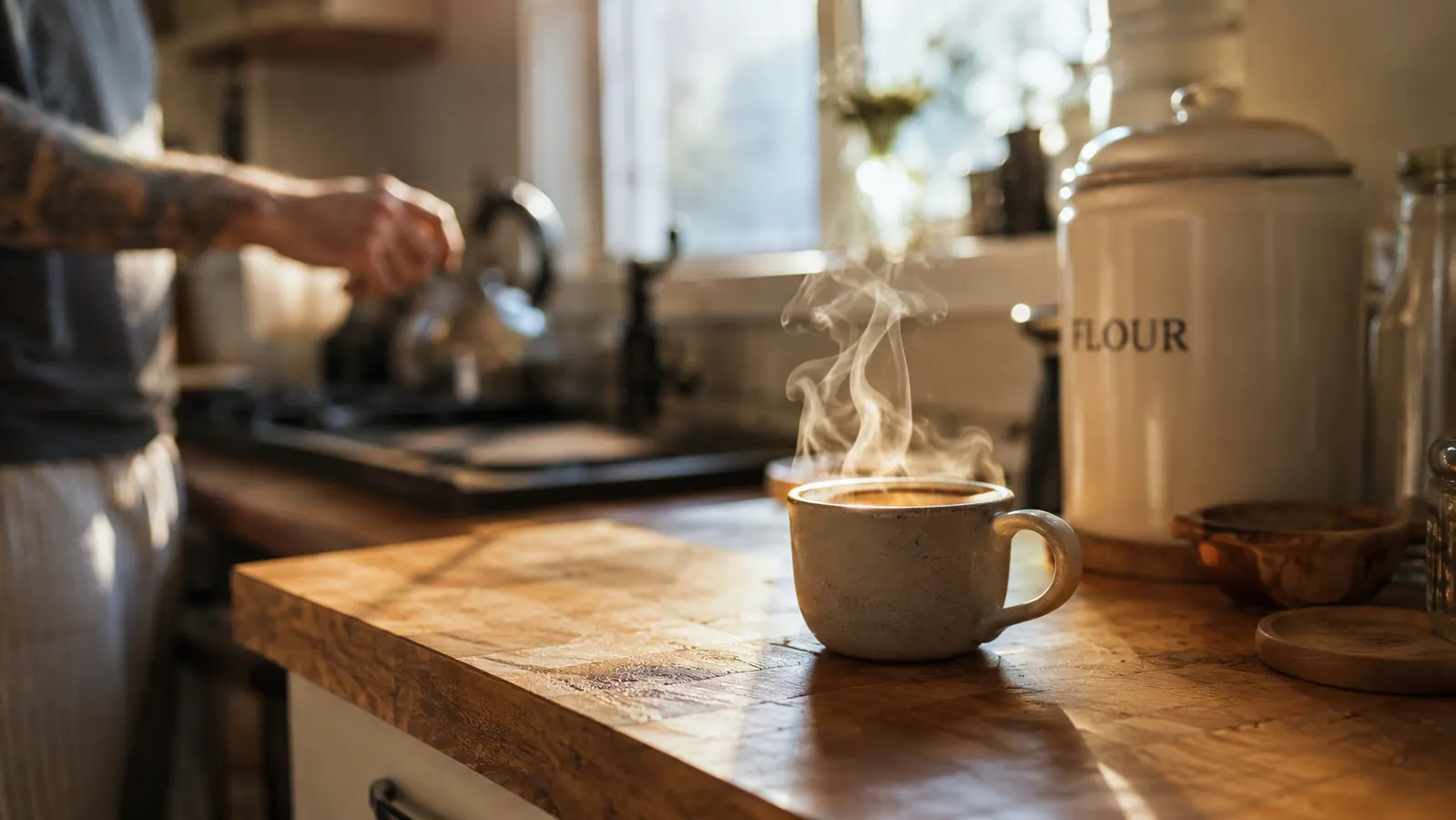
Right now there is a Breville Barista Express sitting on my counter, and I pull a shot from it every single morning before I do anything else. That is a fact I would not have predicted two years ago, because two years ago I was the person who stopped at the same coffee shop every morning on the way back from dropping my daughter at school. Medium latte, sometimes a cortado if I was feeling fancy. Six dollars here, eight dollars there. I told myself it was a small treat. Then one January I added it all up and wrote the number on a sticky note: one hundred and eighty dollars a month. That number sat next to my flour canister for a few days before I did anything about it.
I had already tried to fix this on my own. I owned a pod machine that made something warm and vaguely coffee-flavored. I had picked up one of those cheap basket-style espresso makers you find on the end cap at the home goods store, the kind that looks the part but produces a thin, sour shot that smells great and tastes like disappointment. I even tried buying pre-ground espresso from the grocery store and tamping it down myself, which only made the situation worse. The common thread in all of it was the same: nothing I made at home tasted like what I was paying for at the shop, so I kept going back to the shop. That was the cycle I needed to break, and cheaper equipment was not going to break it.
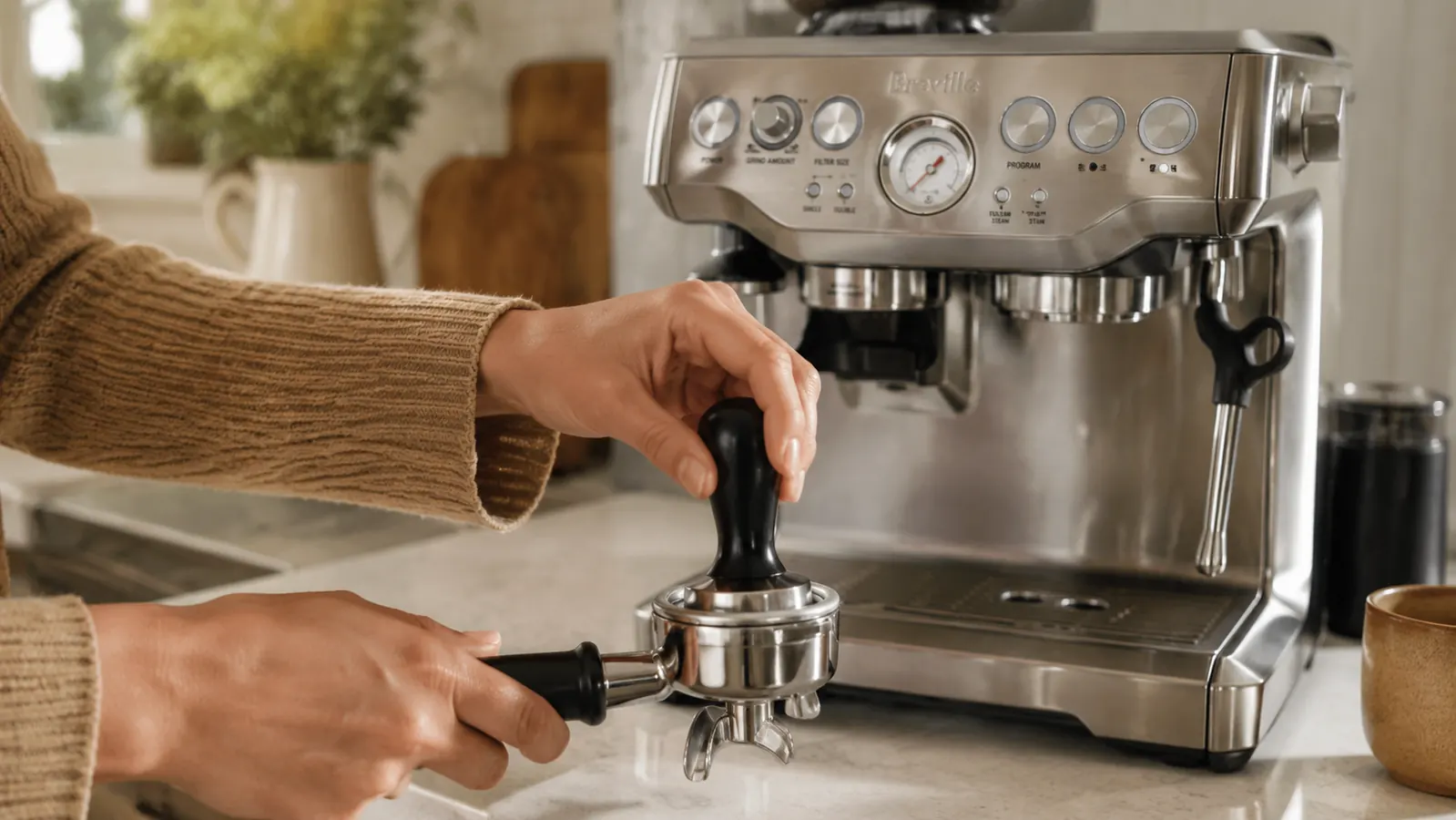
A friend of mine who bakes professionally mentioned she had been using her Breville for about a year and had not visited a coffee shop since. She was specific about why it worked when the other machines had not: the grinder is built in, it uses whole beans ground fresh for each shot, and the pressure and temperature are calibrated in a way that cheaper machines simply cannot replicate. I looked it up. The price made me pause. But I thought about $180 a month and I ordered it. If you want the full spec breakdown, I wrote a long-term review of the Breville Barista Express separately, but this piece is really about what living with it is like.
Nothing I made at home tasted like what I paid for at the shop, so I kept going back. That was the cycle I had to break.
The first two weeks were humbling. I am not someone who gives up on kitchen equipment easily. I have re-seasoned cast iron, I have hand-kneaded stiff bread dough for forty minutes, I have learned to temper chocolate in a humid kitchen. But dialing in espresso was its own education. My first shot ran in about fifteen seconds and tasted like I had poured hot water over burnt wood. I kept a little notebook on the counter and wrote down every grind setting and shot time. By day four I had something drinkable. By day ten I had something genuinely good.
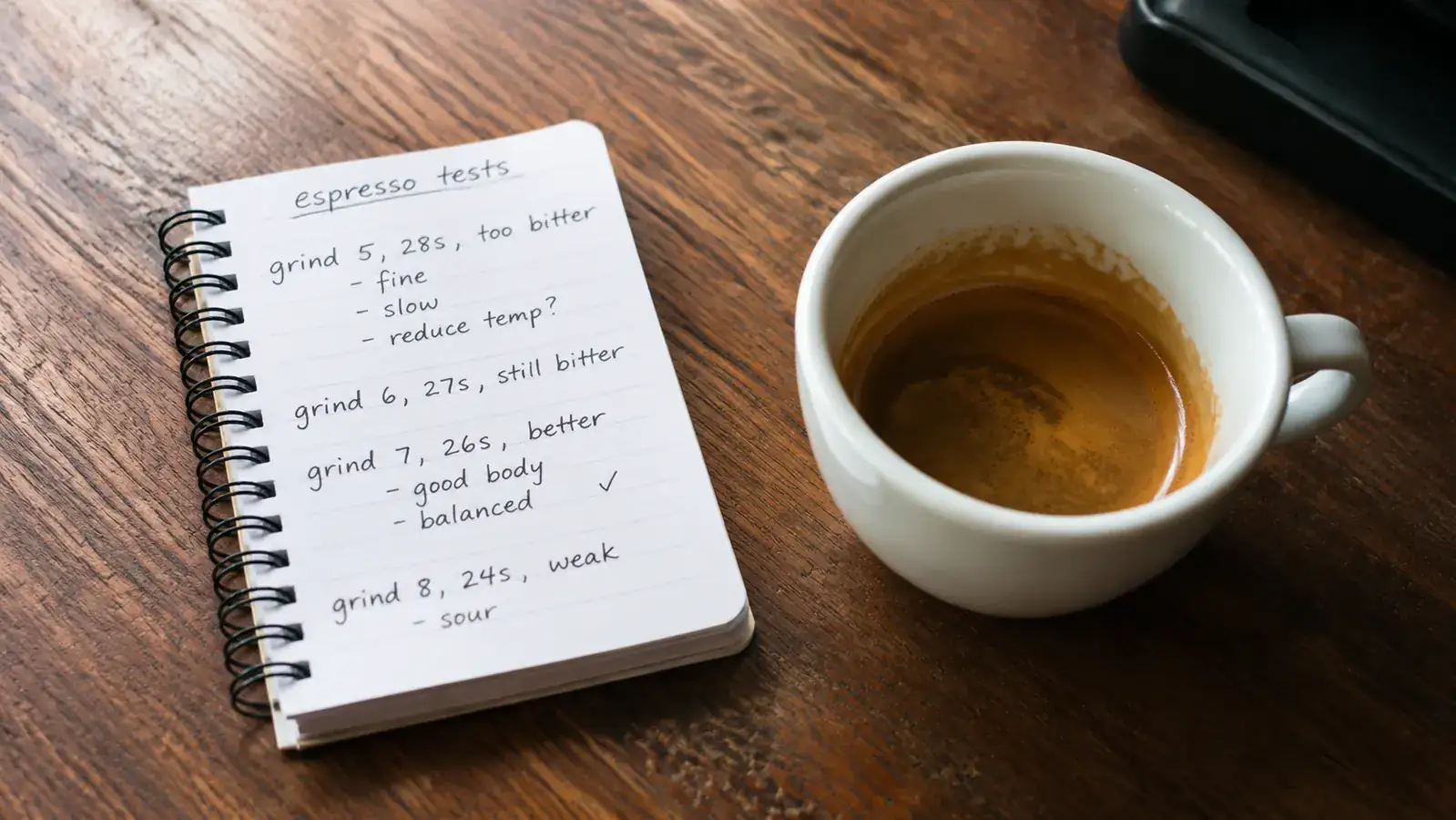
What helped me most was slowing down and treating it the way I treat a new baking recipe. You do not taste a failed loaf and blame the oven. You look at your process: was the dough proofed long enough, was the temperature right, was the flour weighed or scooped? Espresso is the same. The machine gives you control over grind size, dose, and extraction time. That control is what you are really buying. Once I understood that, the learning curve felt less like frustration and more like the early stages of a skill worth having. If you are on the fence about whether it is worth the effort, I find the 10 reasons a home espresso machine pays for itself a useful reality check.
Ready to stop paying $6 for a shot you could pull at home in four minutes?
The Breville Barista Express BES870XL has a built-in burr grinder and is rated 4.5 stars by more than 27,000 home baristas. Check the current price on Amazon before your next coffee shop trip.
Amazon Check Today's Price on Amazon →Three months in, I stopped going to the coffee shop entirely. Not because I forced myself to, but because what I was making at home was genuinely better. I started using single-origin beans from a local roaster I had always walked past. My morning routine shifted from a hurried errand into something I looked forward to. My husband started asking for a shot before he left for work. My daughter, who is fourteen and thinks espresso is disgusting, now asks me to make her a steamed milk so she can feel involved.
There are real tradeoffs I want to be honest about. The machine takes up a significant footprint on the counter, roughly the size of a large stand mixer. It is not quiet. Grinding and pulling a shot in the morning wakes the dog. The steam wand takes some practice before your milk foam goes from bubbly mess to something silky. And the built-in grinder, while very good for the price, has its limits with very light roast beans. I learned to stick with medium to dark roasts and have had no complaints.
What I'd Tell You If We Were Sitting at My Kitchen Table
If you are buying this hoping to skip a learning curve, that is not quite how it works. Budget two weeks of patience and keep a notebook. If you are the kind of person who has ever adjusted a bread recipe, tweaked a cookie ratio, or re-tried something in the kitchen until you got it right, you will figure this out and you will love it. If you want to press a button and get perfect espresso on day one with no effort, a pod machine will suit you better, and there is no shame in that.
For me, the $180 monthly habit is gone. I spend maybe $30 a month on good whole beans now. The machine paid for itself in under three months on the math alone. But honestly the part that surprised me most was how much I enjoy the ritual of it. There is something satisfying about starting the morning with a skill rather than a transaction. That part I did not expect, and it has been the best part.
If this sounds like your kind of upgrade, check what it costs today.
The Breville Barista Express is consistently one of the top-rated all-in-one espresso machines for home use. Prices fluctuate on Amazon, so it is worth checking before you decide.
Amazon Check Today's Price on Amazon →