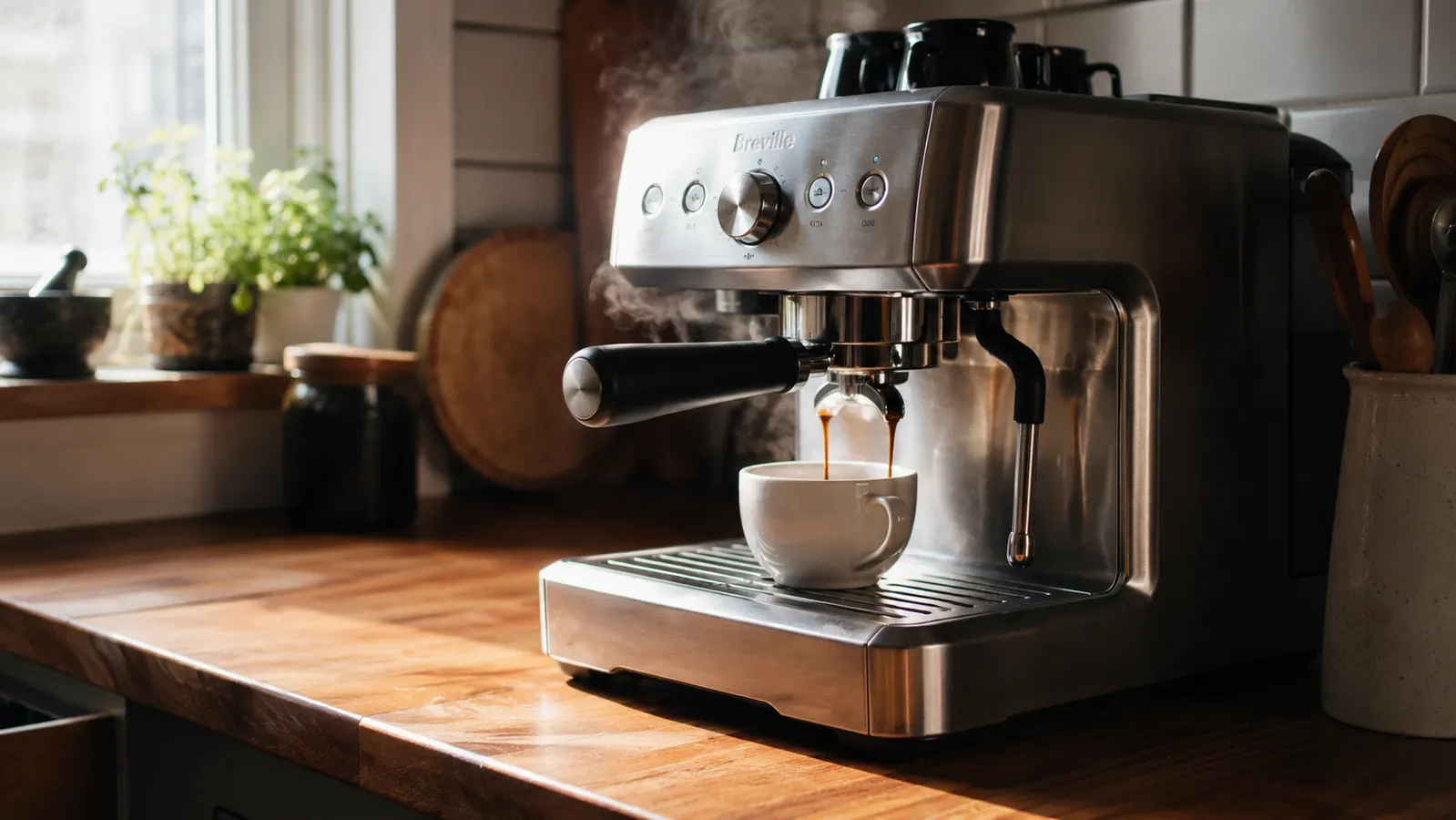
If you are standing between these two machines at checkout, you have probably already read that the Gaggia Classic Pro is what the real espresso people use. And there is truth in that. It is a proper single-boiler machine with a commercial-style portafilter and enough headroom to grow into for years. But here is what those same people do not always mention: the Gaggia needs a separate grinder, a decent tamper, a few weeks of dial-in time, and a willingness to chase variables. The Breville Barista Express has a conical burr grinder built right in, a pressure gauge on the front, and a learning curve that most people can clear in a weekend. For most home kitchens, that is the difference between a machine you use every morning and one that sits on the counter making you feel slightly guilty.
I will be direct: the Breville Barista Express is the right call for the majority of people reading this. The Gaggia is not a bad machine, it is just a different project. I will walk through both so you can see exactly where each one wins, and you can decide which project sounds like you.
| Breville Barista Express | Gaggia Classic Pro | |
|---|---|---|
| Price (approximate) | Premium tier | Premium price point |
| Grinder included | Yes, integrated conical burr (25 settings) | No, separate grinder required |
| Boiler type | Dual-wall thermocoil, 54mm portafilter | Single boiler, 58mm commercial portafilter |
| Steam wand | Swivel Panarello, beginner-friendly | Professional wand, requires practice to texture milk |
| Pressure gauge | Yes, front-facing shot pressure gauge | No built-in gauge |
| Pre-infusion | Built-in automatic pre-infusion | Manual mod required for pre-infusion |
| Warm-up time | ~30 seconds to ready | ~25 minutes recommended for stable temps |
| Upgrade ceiling | Moderate (grinder is the limiting factor) | High (58mm basket, mods-friendly, long serviceable life) |
| Best for | Home baristas who want great shots without a second appliance | Enthusiasts willing to invest time, a separate grinder, and ongoing learning |
You want great espresso at home, not a new part-time hobby.
The Breville Barista Express has a built-in conical burr grinder, automatic pre-infusion, and a front-facing pressure gauge that tells you in real time whether your shot is on track. Everything you need for quality espresso is in one machine, right out of the box. Over 27,000 buyers on Amazon agree it delivers.
Amazon Check Today's Price on Amazon →Where the Breville Barista Express Wins
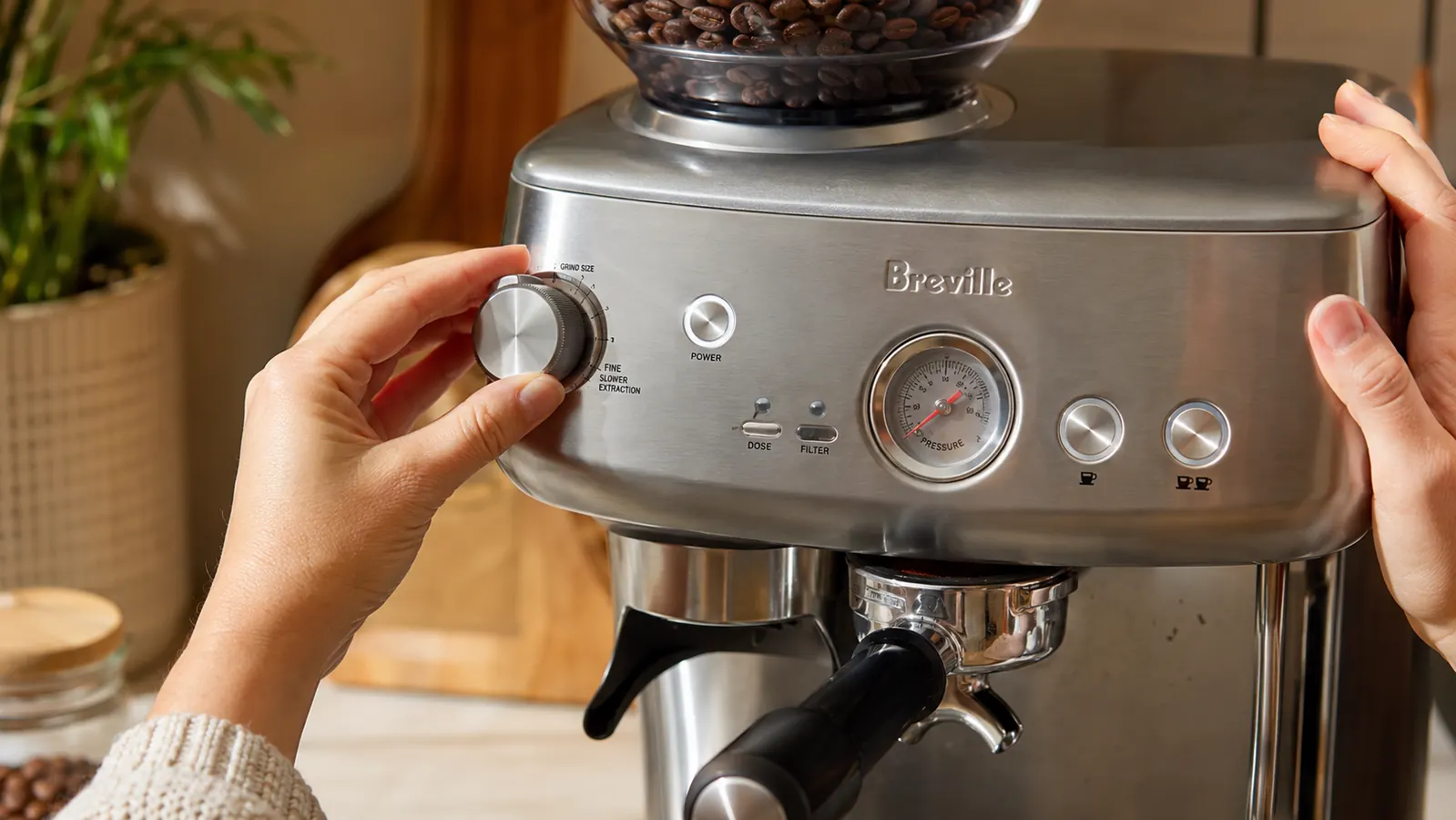
The single biggest practical advantage is the integrated grinder. Espresso is more grind-sensitive than any other brew method. A grinder that cost less than the machine is almost always the weak link in a home setup, and buying a Gaggia Classic Pro without budgeting $150 to $250 for a decent burr grinder means you are starting at a disadvantage before you ever pull a shot. The Barista Express ships with a conical burr grinder built into the top of the machine, with 25 grind settings that give you real control over dose and extraction. It is not the equivalent of a standalone Baratza Encore, but it is meaningfully better than what most first-time espresso buyers end up pairing with an entry-level machine.
The pressure gauge on the front panel is worth more than people expect. Espresso at home fails silently. A shot that looks okay but pulls in 18 seconds instead of 28 might taste thin and acidic, and without feedback you have no idea what went wrong. The gauge shows you real-time extraction pressure, which turns vague troubleshooting into something you can actually act on. Grind finer, the pressure comes up. Grind coarser, it drops. That feedback loop is one of the fastest ways to learn espresso, and the Gaggia Classic Pro does not give you that out of the box.
Warm-up time is the underrated daily-use factor. The Gaggia Classic Pro, despite its strong reputation, needs a long preheat to stabilize the boiler at a proper brewing temperature. Most serious Gaggia owners leave the machine on for 20 to 25 minutes before pulling their first shot, which is fine on a weekend morning but genuinely annoying on a Tuesday when you need coffee and a meeting starts in 12 minutes. The Barista Express is ready in about 30 seconds. That alone changes how often you actually use it.
Pre-infusion is another quiet win for the Breville. It automatically saturates the puck with low-pressure water before the full extraction starts, which reduces channeling and gives you a more forgiving margin on your grind and tamp consistency. The Gaggia can be modded for this, but out of the box it does not have it.
Where the Gaggia Classic Pro Wins
The 58mm commercial portafilter is a genuine advantage for anyone who wants to grow into the hobby. It means you have access to the full ecosystem of aftermarket baskets, bottomless portafilters, and precision tools that serious home baristas use. The Breville ships with a 54mm portafilter, which is fine but has a smaller aftermarket selection and is not the standard you will find in specialty coffee circles. If you want to experiment with different basket depths, naked portafilter flow visualization, or competition-grade baskets, the Gaggia is built for that life.
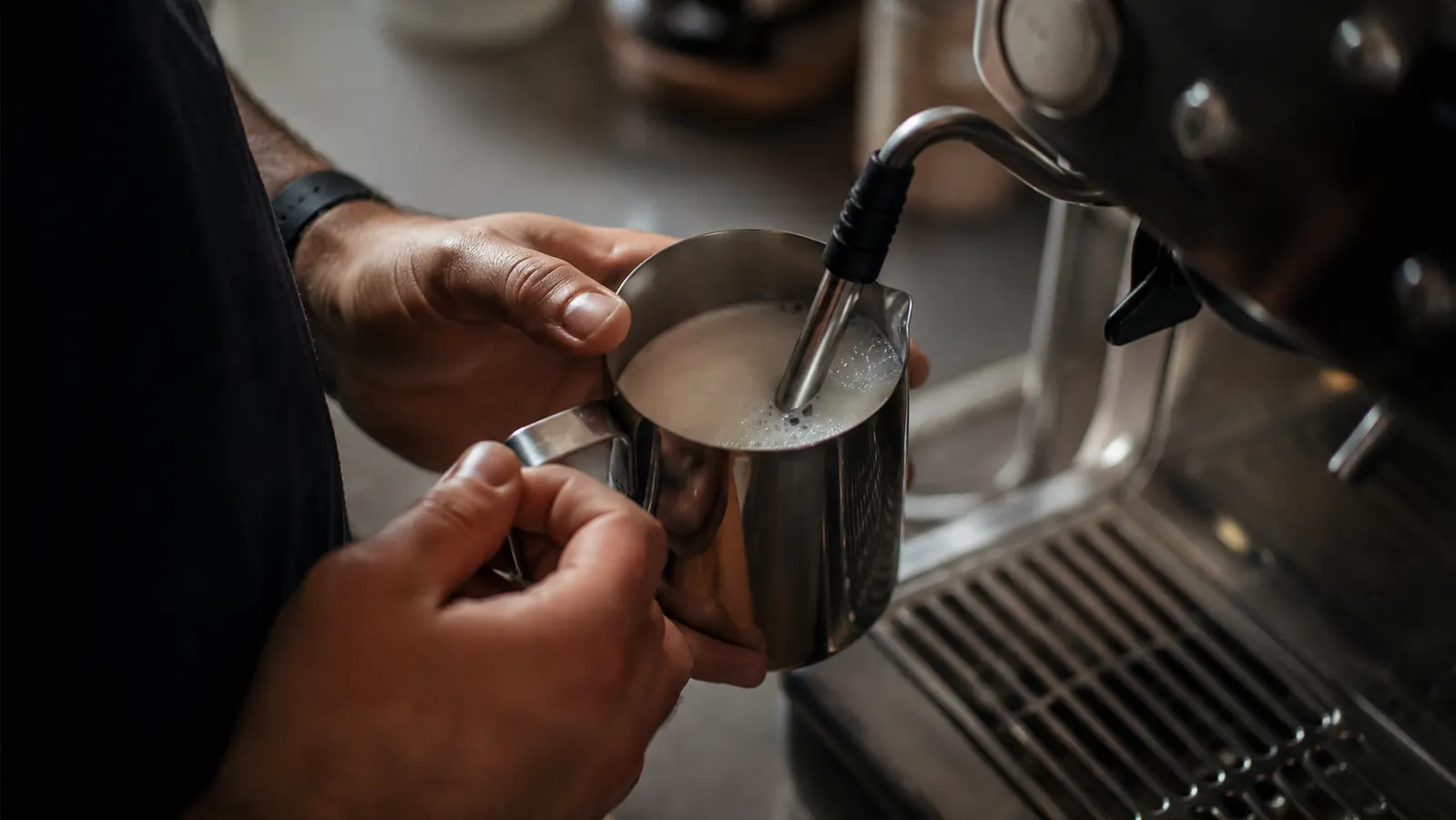
The Gaggia Classic Pro also has a better steam wand for latte art. It puts out real steam pressure through a single-hole tip (with the standard tip replaced, as most owners do), which gives you the control needed to create microfoam with actual texture. The Breville's Panarello wand is excellent for beginners because it auto-introduces air, but it tends to produce foam that is a bit too coarse for tight latte art. If pouring rosettas is the goal, the Gaggia is the machine for you.
Long-term durability is another honest point in the Gaggia's favor. The internals are relatively simple, parts are easy to source, and a well-maintained Classic Pro can last 15 or 20 years. Breville machines are built well, but they are more electronically complex, which adds potential failure points. The Gaggia's simplicity is a feature for people who think in terms of decade-scale appliance ownership.
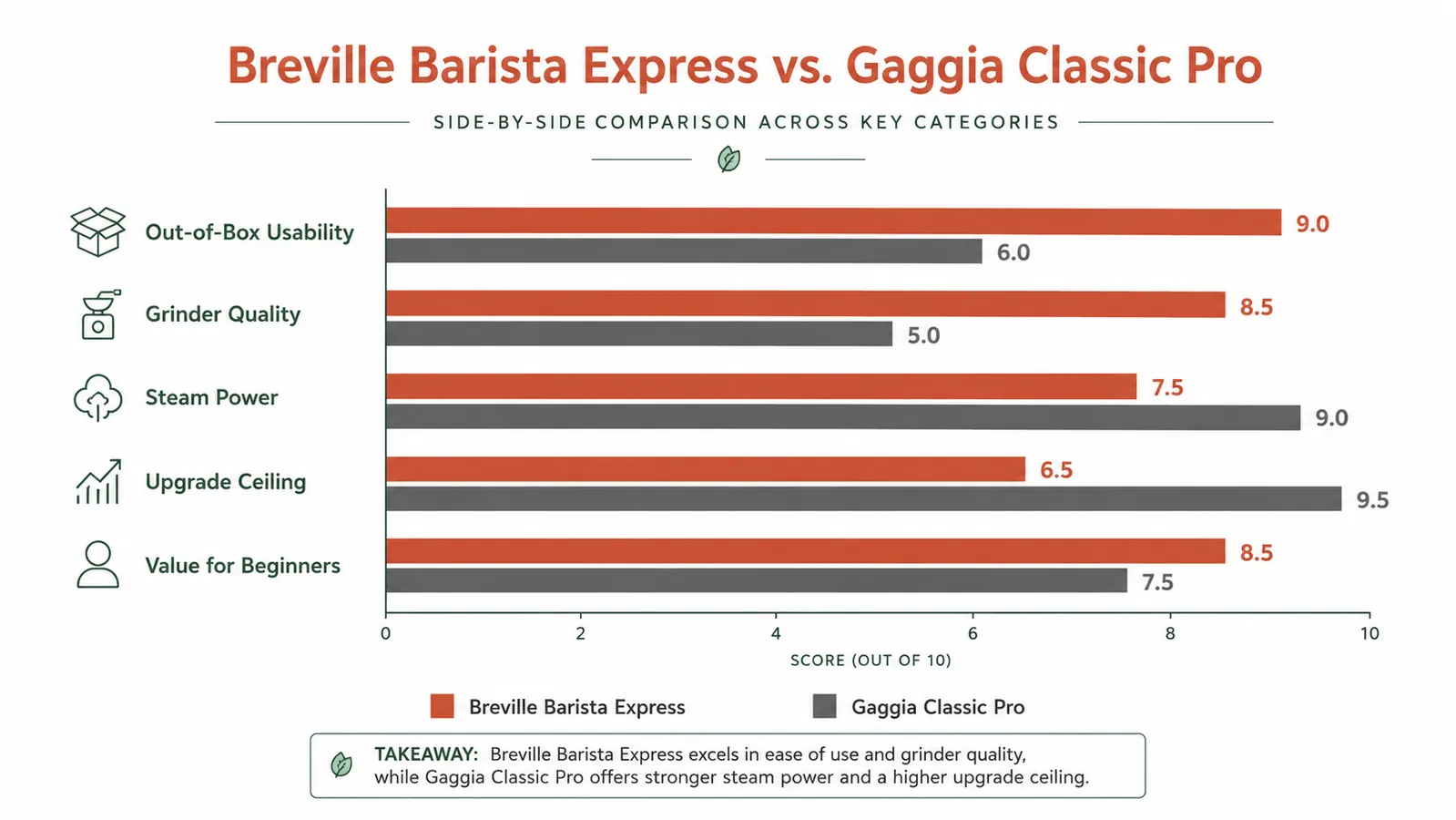
The Gaggia Classic Pro is a better machine in the hands of an experienced home barista with a quality separate grinder. The Barista Express is a better machine for almost everyone else, which is most of us.
The Grinder Question Is the Whole Ballgame
If you already own a quality standalone espresso grinder, say a Baratza Sette 30 or a Eureka Mignon, the math changes considerably. Pair one of those with a Gaggia Classic Pro and you have a genuinely excellent two-machine setup that will outperform the Barista Express on shot quality and give you the 58mm platform to grow on. That combination will cost you considerably more.
If you do not own a quality espresso grinder and are not budgeting for one separately, the Barista Express is the more honest choice. You are getting a solid conical burr grinder and a well-built machine in one box, for less than the Gaggia-plus-grinder combination would cost. The integrated grinder is not a compromise, it is the point.
There is also a counter-intuitive reality worth naming: the built-in grinder in the Barista Express is one of the most common things enthusiasts criticize about it, and also one of the main reasons it converts so many people into daily espresso drinkers. It removes a barrier. You do not have to think about which grinder to buy, calibrate two machines, or deal with two power cords. You wake up, press a button, and grind into the portafilter. For a busy person who genuinely loves good coffee but is not interested in the hobby side of espresso, that frictionlessness is the entire value proposition. To read about dialing in grind settings in more detail, see my guide on how to dial in espresso on the Breville Barista Express.
Shot Quality: What You Can Actually Expect
On well-sourced medium roasts, the Barista Express produces genuinely good espresso. Not specialty-shop quality, but significantly better than any capsule machine and competitive with what a lot of independent cafes pour. With the grind dialed in and a consistent tamp, you can pull shots with a proper honey-like texture, a reddish-brown crema, and sweetness that does not need sugar. That is the ceiling for most people, and it is a good ceiling.
The Barista Express does struggle with very light roasts. Light roasts are denser, require a finer grind than the machine's conical burrs can consistently manage, and tend to produce sour, underdeveloped shots unless you really know what you are doing. If you buy exclusively from third-wave specialty roasters who light-roast everything, you may hit a wall with this machine. The Gaggia Classic Pro, paired with a quality separate grinder, handles light roasts better. For most people drinking medium or medium-dark espresso blends, this is not a practical concern. For a deeper look at long-term shot quality, the 18-month review of the Barista Express covers what changes after the dial-in period is over.
Who Should Buy the Breville Barista Express
You are buying espresso from a coffee shop daily or spending too much on a capsule machine, and you want to fix that without turning espresso into a research project. You do not own a standalone grinder and are not planning to buy one separately. You want to be pulling decent shots within a few days of unboxing, not a few weeks. You drink mostly medium to dark roast espresso blends. You want one machine on the counter, not two. If that description sounds like you, buy the Breville Barista Express and stop second-guessing.
Who Should Buy the Gaggia Classic Pro Instead
You already own or are budgeting for a quality standalone espresso grinder. You are genuinely interested in espresso as a craft and are willing to spend months learning variables, pulling bad shots on the way to good ones, and potentially modding the machine for better temperature stability. You want a machine that can grow with your skill level for 10 or 15 years. You are patient with warm-up times. If that description fits, the Gaggia Classic Pro is worth the learning curve, and you will likely end up happier with it long-term than someone who wanted quick results.
If you have read this far, you already know which machine fits your kitchen.
The Breville Barista Express is the choice for anyone who wants quality espresso at home without buying two machines, waiting 25 minutes every morning, or spending weeks figuring out why the shots taste wrong. It is the most practical path from coffee-shop spending to a machine you can actually use every day. Check current pricing on Amazon and see why it has over 27,000 reviews.
Amazon Check Today's Price on Amazon →